



What Should You Know About Who Is Using Your BIM Content?
A BIM download is more than a number — it’s a meaningful signal of product interest. But how much do manufacturers really need to know about the individual behind it? This article explores how BIM content analytics can provide valuable audience and engagement insights without creating unnecessary barriers for designers.

Part 3 of Open for Business — A three-part series exploring how changing working practices and digital expectations are reshaping access to manufacturer product information.
If architects and designers are downloading and using your BIM content, you should want to know about it.
For a building product manufacturer, that engagement is valuable.
Someone has discovered your product, investigated it and chosen to take a digital representation of it into their design environment. They may be evaluating it, comparing it with alternatives or actively using it within a project.
Across hundreds or thousands of interactions, the picture becomes even more valuable.
Which products are attracting the most interest? What types of companies and design professionals are engaging with them? Where is that engagement occurring? Which parts of the library are performing strongly? Is engagement increasing over time?
These are important questions for any manufacturer investing in BIM.
But they raise another:
How much should you know about who’s using your BIM content — and how much do you actually need to know about the individual?
A BIM download matters
It’s important not to understate what a BIM download represents.
If an architect or designer downloads your BIM content, they’ve taken a meaningful step in engaging with your product.
They’ve found it, investigated it and chosen to take the content into their design environment. That creates an opportunity for the product to become part of their workflow and potentially part of a real project.
That’s exactly why manufacturers invest in BIM in the first place.
So the question isn’t whether BIM downloads and other engagement data have commercial value.
They clearly do.
The question is how manufacturers can understand that engagement — and how much personal information they need in order to do it.

Look at it from the designer’s side
One obvious approach is to ask users to identify themselves before accessing BIM content.
Name. Company. Email address. Phone number. Perhaps project information.
For the manufacturer, that can seem like a reasonable exchange. You’ve invested in creating the content, somebody is interested enough to download it, and you’d like to know who they are.
But now look at the same interaction from the designer’s perspective.
Think about how many product categories can be involved in a building: lighting, furniture, flooring, plumbing fixtures, appliances, doors, hardware, roofing, façades, insulation, electrical equipment, finishes and many more.
Within each category, a designer may investigate several manufacturers while researching, comparing, selecting and documenting products.
Your brand may be one of dozens they interact with during a single project.
Now imagine every manufacturer requiring that designer to provide their personal details or create another account before accessing its BIM content — with each interaction potentially resulting in another company receiving their information and initiating future marketing or sales contact.
What seems reasonable from the perspective of one manufacturer can look very different when multiplied across an entire project.
It’s an important principle for any manufacturer designing a digital customer experience:
You are not the only brand your customer is dealing with.
What we heard from BIM managers
This was something we considered carefully when developing BIMcontent.com.
From the outset, one of our fundamental objectives was to get architects and designers using the platform — and the manufacturer content within it — as widely and regularly as possible.
Because the value of a manufacturer BIM library isn’t created simply by making the files available.
It’s created when architects and designers find them, use them and bring those products into their projects.
So we spoke with BIM managers from a number of major design practices about what BIMcontent.com needed to deliver for them to be comfortable recommending it within their practices and encouraging their wider design teams to use it.
Those discussions influenced the content standards, user interface, search and browsing experience, download options and other aspects of the platform.
They also influenced our approach to data.
The feedback we received was important.
If using BIMcontent.com meant employees’ personal information was automatically passed to every manufacturer whose content they accessed, those BIM managers could not comfortably recommend it as a default resource across their practices.
That created a fundamental issue.
If the way we collected and shared data discouraged design practices from adopting the platform, solving the manufacturer’s desire for more data could actually reduce the adoption that creates the value in the first place.
At the same time, manufacturers quite reasonably wanted visibility into that usage.
Both sides had a reasonable expectation.
The challenge was to satisfy both.

Personal data is only one part of the picture
Knowing the identity of an individual downloader can be valuable.
But understanding the companies, professional roles, locations, products and patterns behind hundreds or thousands of interactions tells a manufacturer something different about how its BIM investment is performing.
So rather than simply asking “Who downloaded our file?”, we wanted manufacturers to be able to understand questions such as:
Which companies are engaging with our products? What types of professionals are using our content? Which products are generating the most activity? Where is that engagement occurring? What are people viewing and downloading? How is engagement changing over time?
These are valuable forms of market intelligence.
Manufacturers shouldn’t want less information about their BIM audience.
They should want better information about the engagement that matters.
Becoming a custodian of the data exchange
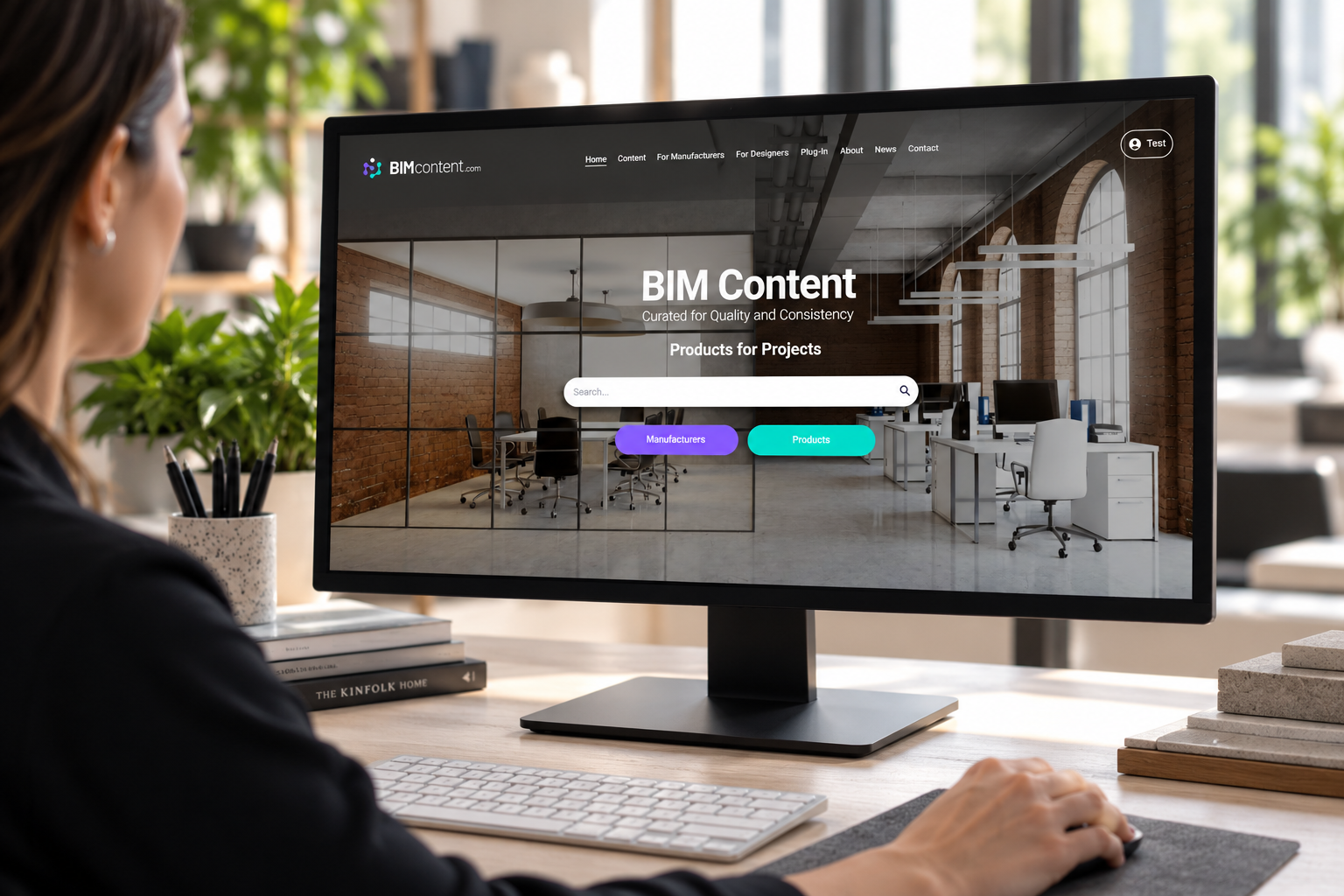
Our solution with BIMcontent.com was to sit between the designer and the manufacturer.
Users identify themselves to BIMcontent.com, allowing the platform to understand its audience and how that audience interacts with manufacturer content.
But an individual’s personal information isn’t automatically passed to every manufacturer whose content they access.
Instead, manufacturer partners receive meaningful intelligence through their dashboards, including information such as company, professional role, company size and location, together with content views, engagements and downloads.
This means manufacturers can see much more than a total download number.
They can start to understand who their audience is, what it’s interested in and how it’s behaving.
In effect, BIMcontent.com acts as a custodian of the data exchange.
The designer doesn’t need to surrender their personal information to every brand whose content they use.
The manufacturer still gains meaningful visibility into engagement with its products.
And BIMcontent.com can facilitate useful communication between the two.
The same model can work on the manufacturer’s website
Importantly, this doesn’t require the designer to leave a manufacturer’s website and visit BIMcontent.com.
Through a BIMcontent.com integration, manufacturers can make their BIM libraries available within their own websites while retaining the same approach to access and analytics.
For designers who already have a BIMcontent.com account, that means they don’t need to create another manufacturer-specific account or repeatedly hand over their personal information simply because they’ve arrived at another brand’s website.
The manufacturer still receives the audience and engagement intelligence associated with that activity.
Less friction for the designer. More visibility for the manufacturer.
And when you consider how many manufacturers a designer might interact with across a project, removing that repeated friction becomes increasingly important.
You don’t need to own the personal data to maintain the connection
The model also creates opportunities beyond the initial download.
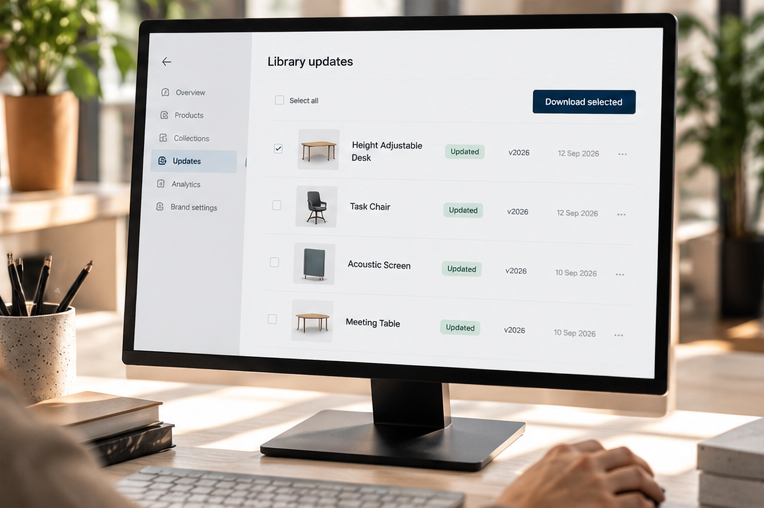
Consider what happens when a manufacturer updates its BIM library.
New products might be added. Existing content might be improved. Product information might change. A previously downloaded file might be superseded.
If BIM files are simply made available anonymously from a manufacturer’s website, the manufacturer may know how many times a file was downloaded but have no practical way of reaching those previous users.
BIMcontent.com provides another option.
Because the platform maintains the relationship with its users, relevant library updates can be communicated to people who have previously engaged with a manufacturer’s content without requiring their personal information to be passed to that manufacturer.
You don’t necessarily need to possess someone’s personal information to provide an ongoing service to them.
The manufacturer benefits because relevant updates can reach previous users of its content.
The designer benefits because the communication is directly related to a resource they’ve chosen to use.
And their personal details don’t need to be distributed across every brand they interact with.
Different interactions tell you different things
A BIM download is valuable.
It tells you that somebody has taken a meaningful step in engaging with your product and potentially bringing it into their design workflow.
Broader engagement data adds context.
Which products are being viewed? What’s being downloaded? Which companies and types of professionals are engaging? Where are they located? Which parts of the library are gaining traction?
And then there is another valuable behaviour: someone actively contacting the manufacturer.
When a designer submits an enquiry, they’ve made a conscious decision to initiate direct contact. Through BIMcontent.com, those enquiries can be forwarded to the manufacturer.
A download is valuable. An enquiry is valuable. Patterns of engagement are valuable.
They simply tell you different things.
A good digital strategy should help manufacturers understand all of those signals rather than reducing the entire picture to a list of email addresses.
Adoption creates the value
Ultimately, manufacturer BIM content exists to be used.
Its commercial value is created when architects, designers and engineers find your products, engage with them and bring them into the design process.
The more widely and regularly that happens among the right audience, the greater the potential value of the manufacturer’s BIM investment.
That’s why adoption has to come first.
Manufacturers should absolutely want to understand that engagement. The opportunity is to do so without introducing barriers that discourage it.
So rather than simply asking:
“Who downloaded our BIM file?”
perhaps the better question is:
“How can we make it as easy as possible for designers to use our products — while understanding as much as possible about the value that engagement is creating?”
That’s better for designers.
Better for manufacturers.
And a better foundation for being Open for Business.
Read the full Open for Business series
This article is Part 3 of Open for Business, a three-part series exploring how changing working practices and digital expectations are reshaping access to manufacturer product information.
Part 1: The 8:30pm Specification Test
Can architects and designers access the product information and digital resources they need, when they need them?
Part 2: Does BIM Content Really Put Your Product IP at Risk?
Does making BIM content easily accessible expose valuable product IP — or does restricting access create a bigger commercial risk?
... Return to the Knowledge Hub ...
Table of Contents
Sign up today for news, industry insights & content releases!
You can unsubscribe at any time by clicking the link in the footer of our emails. For information about our privacy practices, please visit our privacy policy.
FAQs
Related Posts


The building industry is rapidly evolving. Don’t get left behind!
Join the growing list of leading brands who leverage our BIM Content Creation Services
and associated Building Product Marketing Strategies to grow your business.
Contact Us
We look forward to speaking with you!
For inquiries about BIM content creation, web or product marketing solutions as well as general inquiries and support, please fill out the contact form provided, or contact us via the details below.
1300 980 763