



Does BIM Content Really Put Your Product IP at Risk?
Does making BIM content freely available put your product IP at risk? A well-developed BIM object isn’t a manufacturing model. It should give architects and designers the information they need to work with and specify a product — without exposing unnecessary manufacturing or proprietary detail. Before restricting access, manufacturers should consider what the BIM file actually reveals, what’s already publicly available elsewhere, and whether gating the content provides meaningful protection.

Part 2 of Open for Business — A three-part series exploring how changing working practices and digital expectations are reshaping access to manufacturer product information.
“We don’t want our competitors downloading our BIM content.”
It’s a concern we hear regularly from building product manufacturers.
Sometimes it’s a reason for delaying the development of BIM content altogether. More commonly, a manufacturer understands the value of BIM but doesn’t want the files freely available. They might keep them behind a registration form, restrict where they’re hosted or require users to request access.
The reason is often the same: we need to protect our IP.
It sounds reasonable. Your products have taken considerable time, expertise and investment to develop. Why would you want to hand valuable intellectual property to a competitor?
But before deciding how tightly your BIM content needs to be controlled, there’s a more useful question to ask:
What commercially sensitive information is actually in the BIM file — and what could somebody realistically do with it?
A BIM model isn’t a manufacturing model
This is probably the most important distinction.
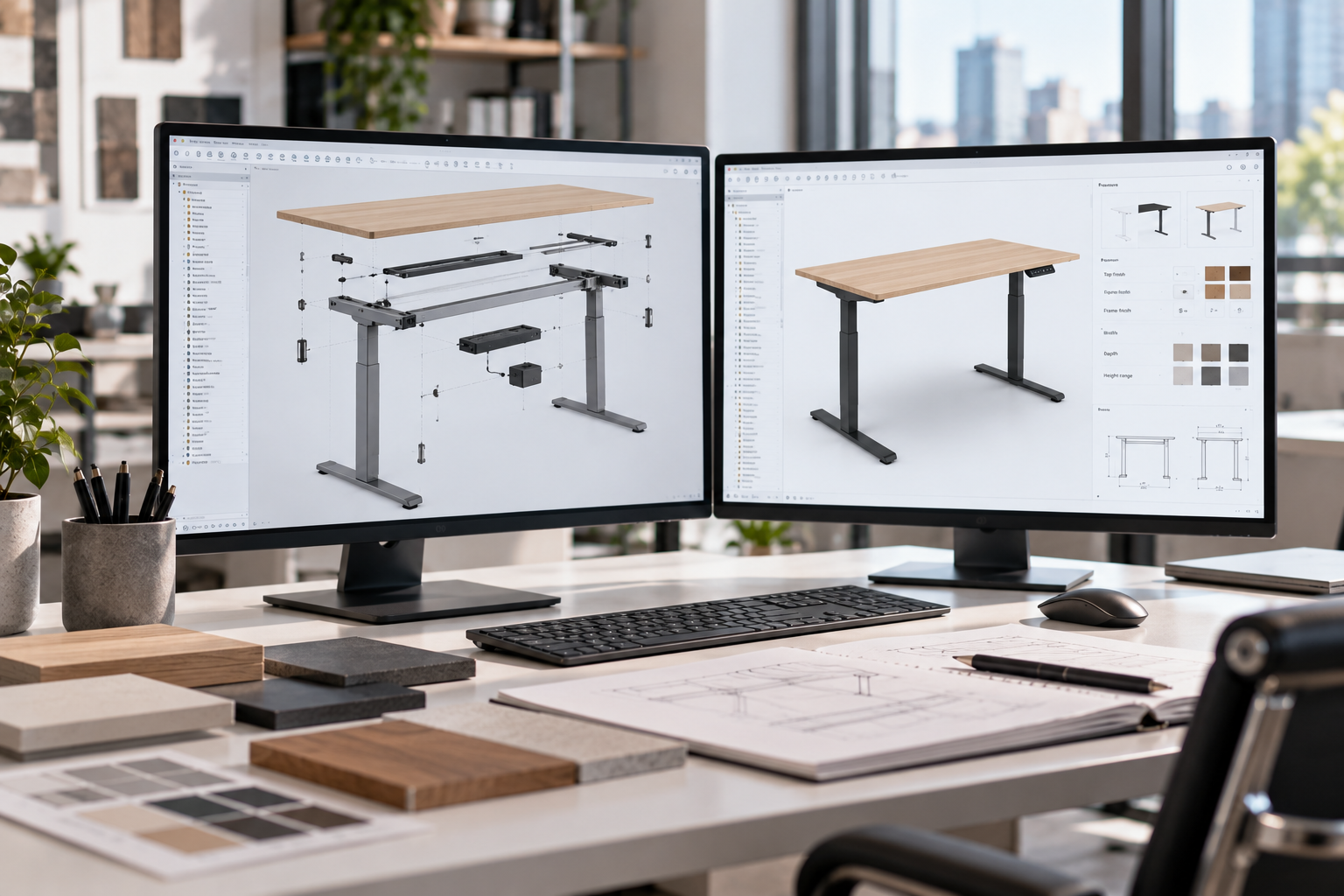
Good manufacturer BIM content is not supposed to be a detailed digital replica containing everything required to manufacture the product.
It exists for a different purpose.
An architect, designer or engineer needs enough information to appropriately represent and work with the product within their project.
Depending on the product, that might include accurate overall dimensions, materials and finishes, product codes, performance information, connection points, clearance zones, configuration options and other information relevant to the way the product will be used.
They generally don’t need every internal component, fixing, manufacturing feature or proprietary design detail.
Autodesk makes this distinction explicitly in its BIM guidance for manufacturers, noting that manufacturing models can contain levels of detail and intellectual property that are unnecessary for BIM and should be simplified before being provided for use in AEC projects.
The principle is simple:
Give designers the information they need to work with the product. That doesn’t mean giving them everything you know about how the product is made.
More detail doesn’t mean better BIM
In fact, within the BIM and design community, over-modelling is a well-known problem.
A highly detailed BIM object might look impressive when viewed on its own. But put hundreds or thousands of unnecessarily detailed objects into a project model and all that additional geometry can increase file sizes and negatively affect model performance without providing any meaningful benefit to the designer.
Good BIM content is therefore not about modelling as much as possible.
It’s about modelling what is useful.
And that has an important implication for IP.
Ironically, some of the information manufacturers are most worried about giving competitors — internal components, manufacturing geometry or proprietary details — may be information their customers don’t want or need in the BIM file either.
So rather than creating highly detailed content and then trying to control who can access it, a better starting point is making sure the content has been developed appropriately for its intended use.
What does your BIM file reveal that isn’t already available?
Here’s a useful exercise.
Open one of your BIM files and put it alongside everything already publicly available about that product.
Your website might already provide product photography, dimensions, technical data sheets, specifications, installation instructions, certifications, brochures, drawings, materials, finishes and performance data.
And depending on the product, someone can simply obtain the physical product itself.
Now compare all of that with your BIM content.
What could a competitor actually learn from the BIM file that they couldn’t already learn elsewhere?
For an appropriately developed BIM object, the answer may be: not very much.
Take a piece of furniture, tap, light fitting or piece of equipment.
A simplified Revit family might provide the overall form, dimensions, connection requirements and product information a designer needs.
A combination of high-resolution photography, dimensional drawings, technical literature and the physical product itself may tell somebody considerably more about how the product is actually designed and manufactured.
Yet manufacturers routinely make those resources readily available because they help customers understand and work with their products.
The fact that a BIM file is three-dimensional doesn’t automatically make the information inside it more commercially sensitive.
Some content genuinely does reveal more
There is an important caveat.
Not every digital resource contains the same type or level of information.
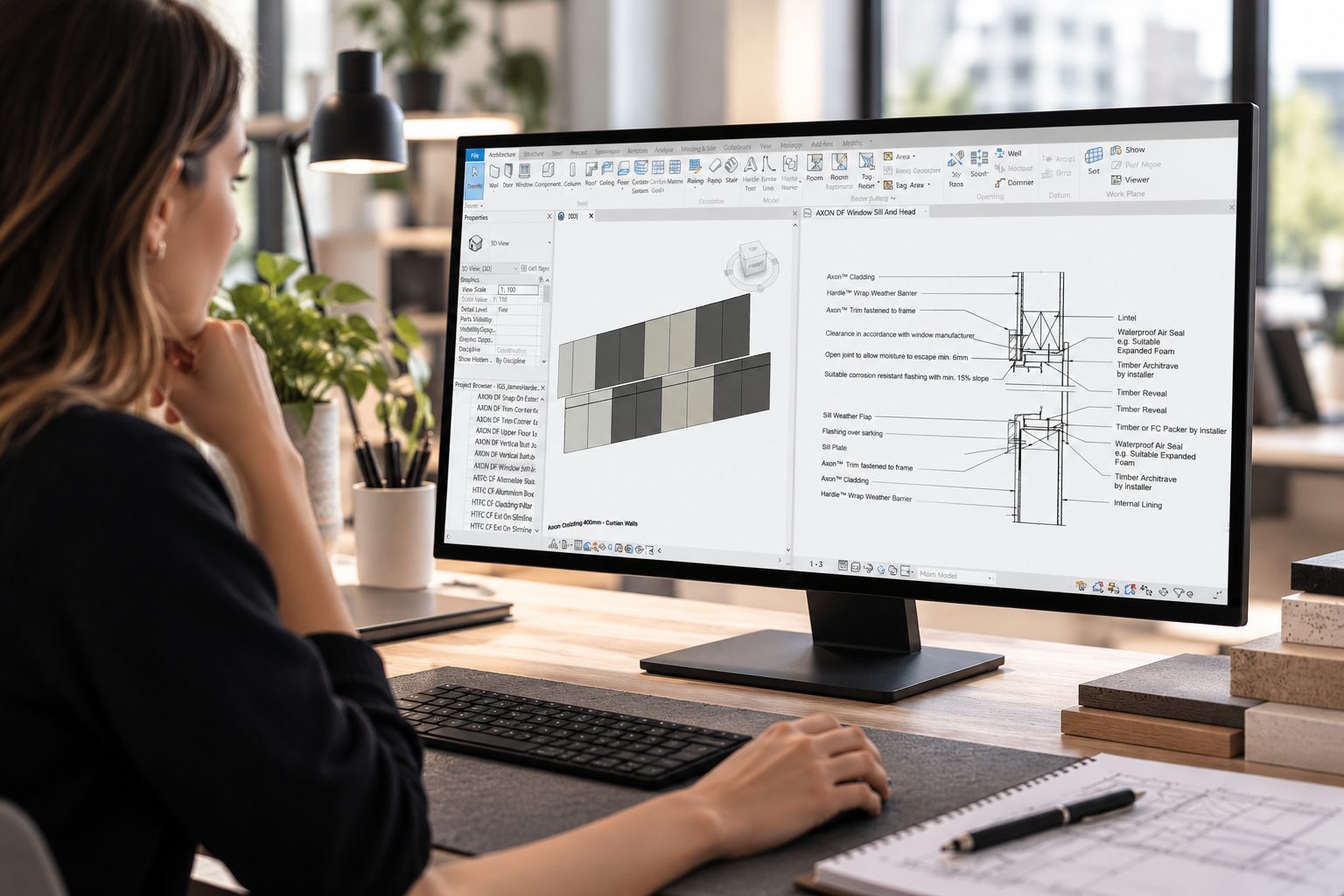
A construction detail, for example, may need to show fixings, junctions, interfaces between components or how a proprietary system interacts with surrounding construction. Some products and systems may also legitimately require more detailed BIM information to be useful.
So this isn’t an argument that manufacturer digital content never contains sensitive information.
It’s an argument for looking at the actual information and the actual risk.
What information does this resource contain?
Why does the customer need it?
Is that information already available elsewhere?
What could somebody realistically do with it?
If a resource genuinely contains information that could materially help someone reproduce a proprietary product, system or process, that deserves consideration.
But that is quite different from assuming a BIM file represents a significant IP risk simply because it is BIM.
Does restricting access really protect it?
There’s another practical question worth considering.
Imagine a competitor genuinely wants your BIM file.
You require users to enter their name, company and email address before downloading it.
Have you meaningfully protected the information — or have you primarily added another step for legitimate users?
Once a BIM file has been downloaded, a manufacturer has limited control over where it subsequently goes.
And if a competitor genuinely wants to understand or reproduce a physical product, an appropriately simplified BIM object may not be the most useful source of information available to them anyway.
That creates an unfortunate imbalance:
You risk making the content harder to access for the architects and designers you want using it, while doing relatively little to stop a determined competitor from obtaining it.
That matters because the whole reason for investing in BIM content is for it to be used.

Protect what genuinely needs protecting
None of this means manufacturers should ignore legitimate IP concerns.
It means the response should be proportionate to the actual risk.
If unnecessary manufacturing information or genuinely sensitive detail is included in your BIM content, ask whether it needs to be there.
If detailed information is necessary for the resource to do its job — as may be the case with construction details, technical systems or some specialist products — consider what somebody could realistically do with that information and whether restricting access provides meaningful protection.
But if your BIM content is an appropriately developed representation containing largely the same product information already available through your website, technical literature, drawings, photography or the physical product itself, it may be worth reconsidering whether restricting access is actually protecting anything particularly valuable.
BIM content is developed to be used. Its value to a manufacturer ultimately comes from architects, designers and engineers putting it into real projects.
That doesn’t mean every piece of digital product information should automatically be made public.
It does mean that restricting access should solve a genuine problem.
So before putting BIM content behind a gate in the name of IP protection, ask:
What information are we actually protecting — and what could somebody realistically do with it?
If there’s a good answer to that question, the concern deserves consideration.
If there isn’t, you may simply be making a useful customer resource harder for your customers to use.
But what about knowing who downloads it?
Of course, protecting IP isn’t the only reason manufacturers restrict access to BIM content.
There’s another argument we hear just as often:
“If someone downloads our BIM content, we want to know who they are.”
That’s a different question.
Knowing who is engaging with your product information can have genuine commercial value. But requiring someone to identify themselves can also introduce friction into the customer experience.
So where is the balance?
That’s what we’ll explore in Part 3 of Open for Business: What Should You Know About Who Is Using Your BIM Content?
Continue the Open for Business series
This article is Part 2 of Open for Business, a three-part series exploring how changing working practices and digital expectations are reshaping access to manufacturer product information.
Part 1: The 8:30pm Specification Test
Can architects and designers access the product information and digital resources they need, when they need them?
Part 3: What Should You Know About Who Is Using Your BIM Content?
How can manufacturers understand who is using their BIM content and the value of that engagement without creating unnecessary barriers?
References
Autodesk — BIM for Manufacturing / preparing manufacturing models for BIM use
... Return to the Knowledge Hub ...
Table of Contents
Sign up today for news, industry insights & content releases!
You can unsubscribe at any time by clicking the link in the footer of our emails. For information about our privacy practices, please visit our privacy policy.
FAQs
Related Posts


The building industry is rapidly evolving. Don’t get left behind!
Join the growing list of leading brands who leverage our BIM Content Creation Services
and associated Building Product Marketing Strategies to grow your business.
Contact Us
We look forward to speaking with you!
For inquiries about BIM content creation, web or product marketing solutions as well as general inquiries and support, please fill out the contact form provided, or contact us via the details below.
1300 980 763