


Video: Why High Quality Materials BIM (Revit) Content Matters
In this Designer Insights episode, a design professional explores why high-quality manufacturer material content is increasingly valuable within modern design workflows. From accurately communicating materiality to clients to supporting visualisation, specification and documentation, well-developed digital materials help designers work with real manufacturer products more efficiently and confidently.
As digital design and visualisation become increasingly integrated into architectural workflows, the way building products are represented digitally matters.
For manufacturers of flooring, coatings, cladding, finishes and other material-based products, this creates a different BIM content challenge. Unlike many product categories where geometry is the primary consideration, material content needs to accurately communicate the visual characteristics of a product while also containing the information designers need behind the scenes.
Key Takeaways
- Material content helps designers accurately communicate the look and materiality of spaces to clients.
- High-quality digital materials need to both look correct and perform correctly within project workflows.
- Creating project-ready materials is a specialised process that can require more than simply supplying product images or swatches.
- Manufacturer-provided materials reduce the time designers spend recreating products themselves.
- Product data behind the visual asset can support identification, documentation and specification.
Why Materials BIM Content Matters
Materials are fundamental to how designers communicate a project.
Flooring, paint, coatings, cladding, wall finishes and other surface products contribute significantly to how a space looks and feels. Clients increasingly expect to understand these design decisions before a project is built, making accurate digital representation particularly important.
Design teams may use multiple applications throughout the design process for modelling, documentation, rendering, real-time visualisation and client presentations. Well-developed manufacturer material assets can help maintain a more consistent representation of a product as designers move between these different environments.
As discussed in our Designer Insights interview, this ability to use material information across multiple software packages is particularly valuable to design teams.
But visual appearance is only one part of the equation.
For content to be genuinely useful, designers need confidence that it represents the manufacturer’s actual product and can perform effectively within their project workflows.
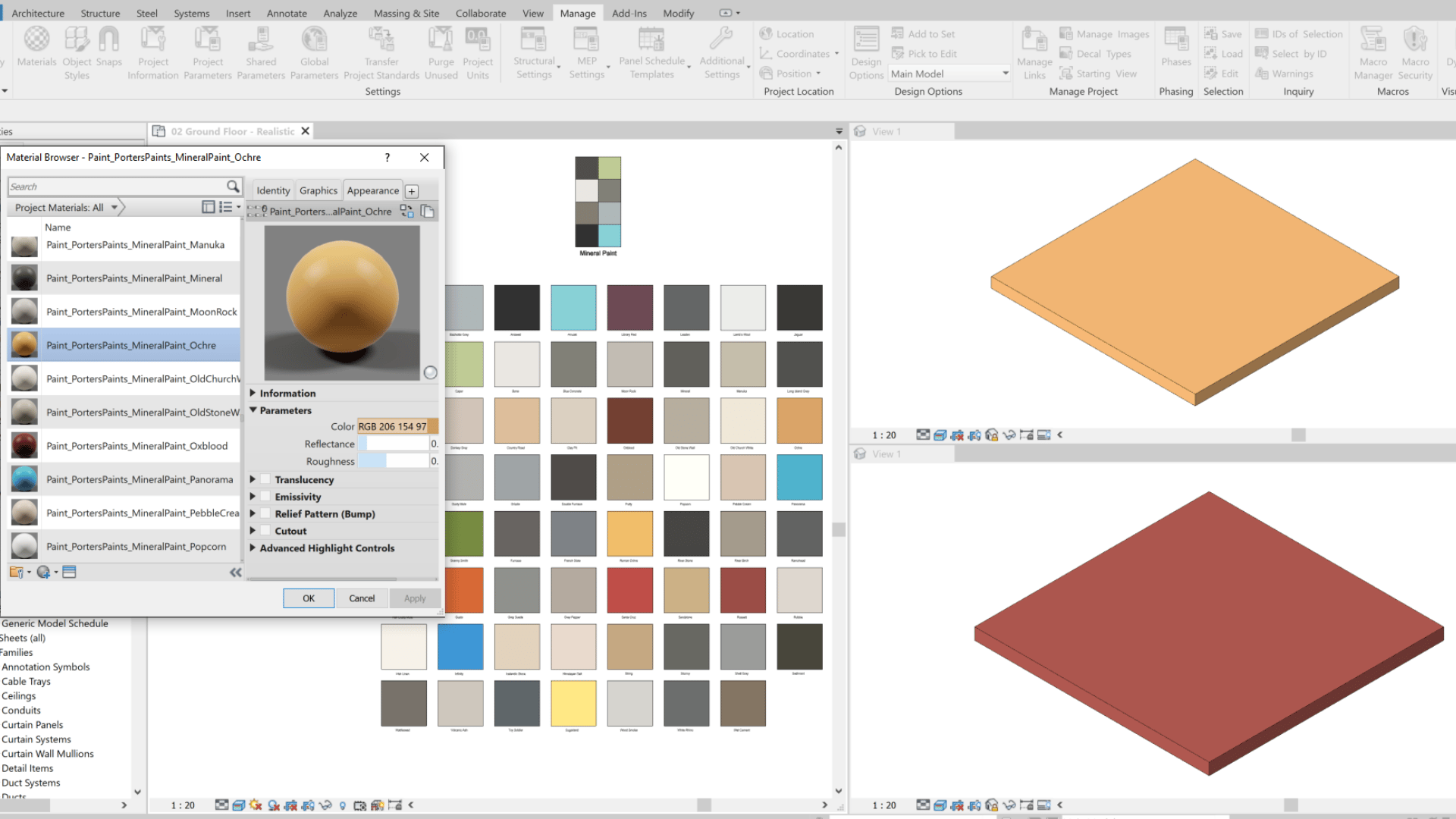
Creating Materials is More Specialised Than it Looks
At first glance, creating a digital representation of a flooring finish, paint colour or cladding surface can appear relatively straightforward.
In practice, creating high-quality material content can require specialist technical knowledge and carefully prepared source assets.
A conventional product photograph or high-resolution image supplied for a website or brochure isn’t necessarily ready to become a project material. Depending on the product, digital assets may need to be specifically captured, edited and configured so that they represent the physical product accurately when applied across large surfaces or used within rendering environments.
For Armstrong Flooring, for example, IGS assisted with controlled product photography and post-production to create images that were seamless and tileable for use in project rendering applications. The resulting Physical-Based Rendering (PBR) materials were developed to support accurate visualisation and greater consistency across rendering platforms.
Products with natural or variable finishes introduce another layer of complexity. Timber-look flooring, for example, needs to account for the variation that occurs across a real installed floor rather than visibly repeating a single image across the entire surface.
This is why material content creation is more than image preparation. The goal is to translate the characteristics of a physical product into a digital asset that behaves appropriately when designers use it within a project.

Material Content Needs to Look Right – and Work Right
Visual accuracy is important, but it doesn’t define quality on its own.
Quality is a key factor in determining whether content will actually be used. It needs to look correct, but it also needs to perform correctly and provide useful information behind the scenes.
This is particularly important within BIM.
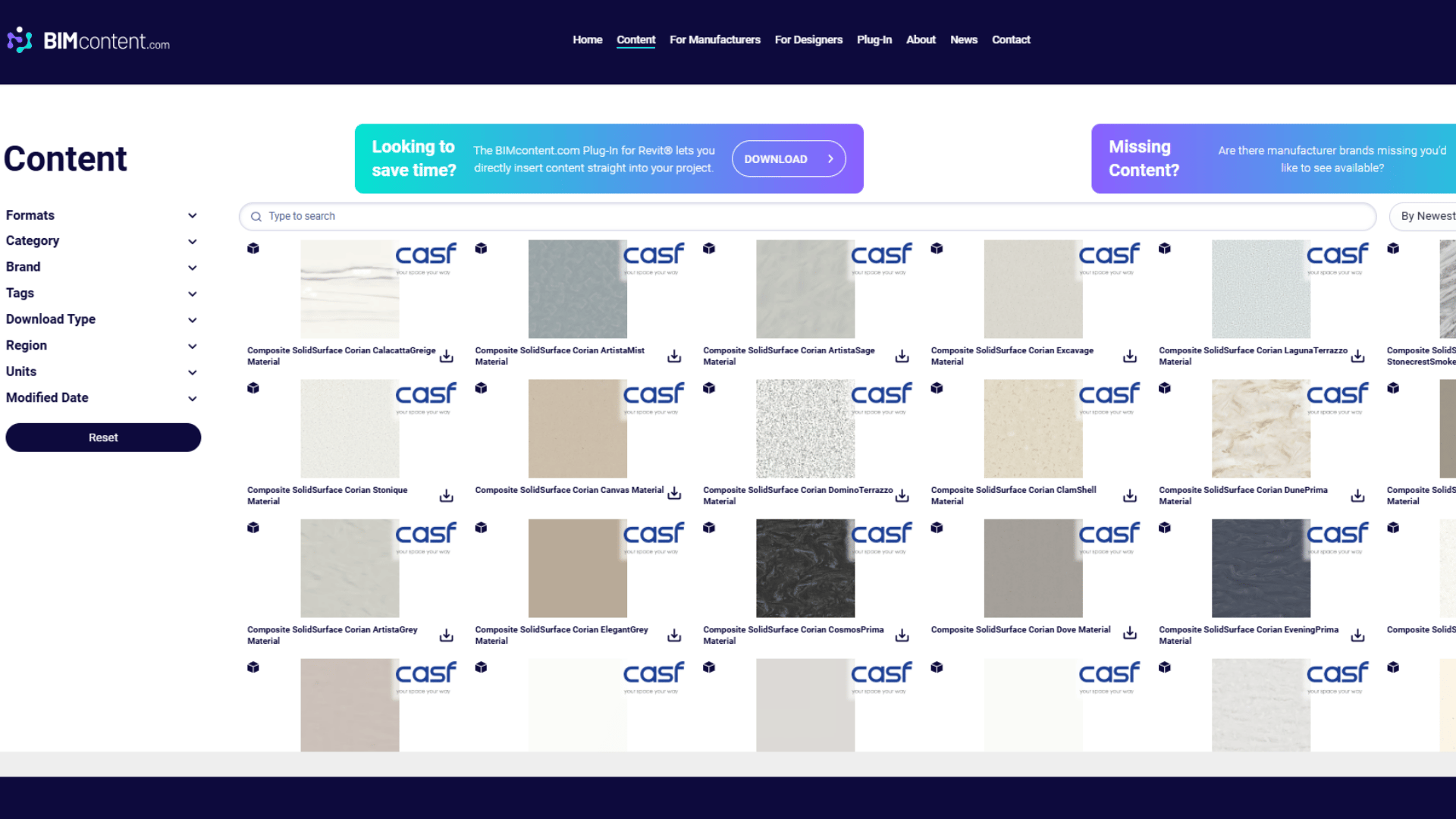
Manufacturer-specific material content can combine the visual representation of a finish with structured product information, helping designers understand exactly what they have selected rather than working with an anonymous or generic material.
Depending on the product and BIM solution, this can include information such as:
- Manufacturer and product identification
- Product or range name
- Product description
- Finish or colour information
- Links to additional manufacturer information
- Relevant technical or specification data
Different Materials Require Different BIM Solutions
There is no single approach to manufacturer material content.
The appropriate solution depends on the nature of the product, how it is selected and how designers need to use it.
A flooring manufacturer’s requirements can be very different from those of a paint, coatings or cladding manufacturer.
For Armstrong Flooring, PBR materials and carefully prepared product imagery help designers realistically represent flooring products while embedded identity data supports specification and documentation.
For Dulux, the scale and complexity of the product offering required a different approach. Its BIM strategy includes Revit and Archicad content across multiple coatings and finishes, alongside the Dulux Colour Add-in for Revit, which gives designers access to thousands of colours and products directly within their project environment and manages associated material images and textures.
James Hardie’s BIM library demonstrates another application, combining system-based Revit and Archicad content with manufacturer finishes and loadable materials that designers can quickly apply within their projects.
The common principle isn’t a particular file type or technology. It is understanding how the manufacturer’s products are actually used by designers and developing digital assets around those workflows.

The Specification Advantage for Material Manufacturers
The growing importance of project visualisation makes high-quality digital content particularly relevant for material manufacturers.
Architects and interior designers increasingly use renders, real-time visualisation and immersive experiences to communicate design intent and help clients understand proposed spaces before construction. The quality of the underlying material assets directly affects these outputs.
Rather than asking individual practices or designers to recreate the same flooring, coating or finish, manufacturers can provide a consistent and accurate digital representation that can be readily incorporated into the design process.
This also removes friction from product selection and specification.
Designers work under significant time pressure. When accurate manufacturer content is readily available, it becomes easier to introduce a real product into a project, visualise it within the proposed space, present it to a client and retain it as the design develops towards specification.
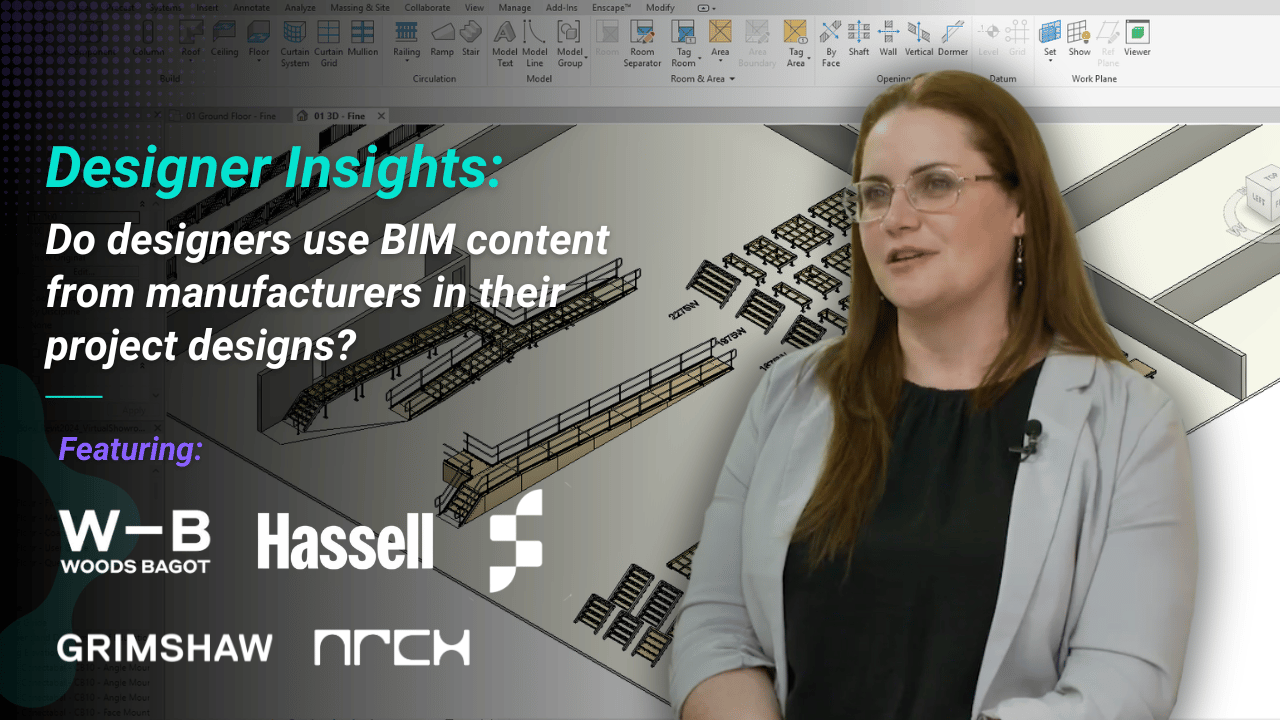
Julia Allen, Design Technology Leader at Hassell:
Manufacturers that produce BIM content do have an innate benefit because if the contents there is available to be used and it’s ready and it’s in front of a designer, it’s going to have more chance of being picked and used.
This follows the same pattern we see across other manufacturer BIM categories.
The easier a manufacturer makes it for designers to accurately represent and work with a real product, the fewer barriers there are between product discovery and specification.
Frequently Asked Questions
What is Materials BIM Content?
Materials BIM content is manufacturer-specific digital content used to represent real building products such as flooring, paint, coatings, cladding and other finishes within BIM and design software.
Depending on the product, this can combine visual assets such as colours, patterns and textures with structured product information that supports visualisation, documentation and specification.
What Makes High-Quality Material Content?
High-quality material content should accurately represent the appearance of the manufacturer’s physical product while being optimised for use within design software.
Depending on the application, this can involve carefully prepared imagery, seamless and tileable textures, appropriate rendering properties, accurate scale, product identity information and other relevant data. Most importantly, the content needs to perform reliably within the workflows designers actually use.
Why Should Manufacturers Provide Material Content?
Creating digital materials can be a specialised and time-consuming task for designers. Manufacturer-provided content gives them a reliable, accurate representation of the real product that can be incorporated into their projects more efficiently.
For manufacturers, this helps improve digital product representation, reduces barriers to product selection and puts manufacturer-specific products directly into the environments where design and specification decisions are being made.
Related Posts

The building industry is rapidly evolving. Don’t get left behind!
Join the growing list of leading brands who leverage our BIM Content Creation Services
and associated Building Product Marketing Strategies to grow your business.
Contact Us
We look forward to speaking with you!
For inquiries about BIM content creation, web or product marketing solutions as well as general inquiries and support, please fill out the contact form provided, or contact us via the details below.
1300 980 763