



Why is it so difficult for manufacturers to build Revit content themselves?
Creating Revit content isn’t just about modelling geometry. Revit’s primary purpose is to help project stakeholders design, document, and coordinate the design and construction of projects in a live, data-rich, parametric environment. While both CAD and BIM software includes geometric modelling, the use case - and therefore the requirements of the models - are very different.
Why Is It So Difficult for Manufacturers to Build Revit Content Themselves?
Manufacturers often ask us: “Why can’t we just build Revit content ourselves?” On the surface, it seems like a fair question – especially for businesses that already have internal teams experienced in CAD drafting or industrial design. After all, Revit is just another modelling tool, right?
Well, not exactly.
The assumption that Revit content creation is just an extension of CAD modelling is one of the biggest misconceptions we see in the market. And if you’re thinking of tackling Revit in-house, it’s worth unpacking why that’s a lot more complicated – and risky – than it first appears.
CAD Models vs Revit Families: Completely Different Use Cases
Manufacturers are often familiar with CAD programs and have varying degrees of 3D modelling experience and skills. Your teams might be producing highly detailed product models with precise geometry for design, manufacturing, visualisation and project planning purposes. These are common and important parts of your business operation processes, but Revit is a completely different beast.
Using Revit isn’t just about creating geometry. It’s about how that geometry behaves within a building project. Revit’s main purpose is to help architects, engineers, and contractors document and coordinate the design and construction of a project in a live, parametric environment. So while both CAD and Revit involve modelling, the end use – and therefore the requirements of the content – are very different.
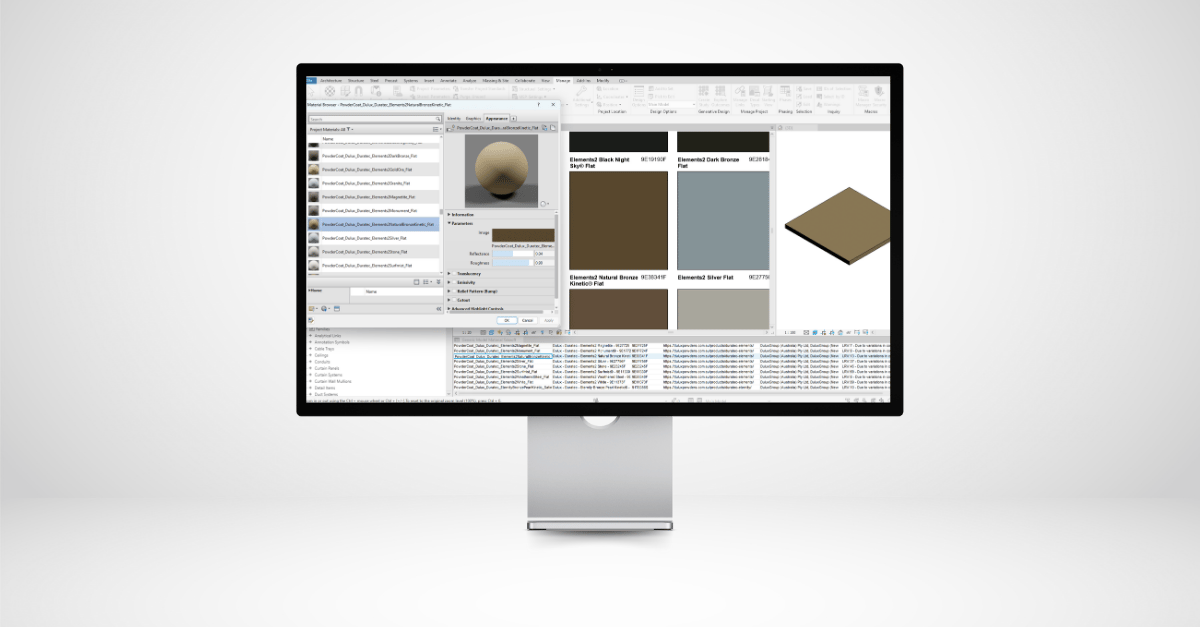
Where CAD focuses on precision and static representation, Revit content needs to:
- Be parametric and adaptable to different design conditions,
- Include embedded data that supports scheduling, tagging, and cost estimation,
- Comply with architectural documentation standards and regional building codes,
- Perform efficiently within a much larger and more complex model environment.
That’s a world away from simply converting a CAD file into Revit.
What Kind of Knowledge Do You Really Need?
Revit content creation isn’t just about having technical modelling skills – it’s about understanding the full context of building delivery within a Revit environment and using BIM-enabled project delivery workflows.
To create BIM content that architects and engineers want to use, you need a deep knowledge of:
- Project Delivery Processes: How design teams document, coordinate, and deliver projects at different stages (concept, detailed design, construction documentation, etc.).
- Construction Standards: Understanding the expectations around detail level (LOD), tolerances, and how components interface in real-world conditions.
- Documentation & Annotation: How Revit content should behave in drawings – things like symbolic representations, masking regions, and tagging requirements that align with architectural standards.
- Data Requirements: What key parameters (like fire ratings, acoustic performance, thermal data) need to be included to support accurate scheduling and specification.
- Model Performance & Best Practices: How to balance detail and file size to avoid bloated models that slow down large projects – something architects are extremely sensitive to.
These are not things your average industrial designer or draftsperson is exposed to. In fact, they’re usually outside the remit of manufacturers altogether because they relate to how your product gets integrated into the built environment, not how it’s made.
The Importance of Understanding the “Why”
One of the biggest challenges in Revit content creation isn’t just knowing how to do something but understanding why it should be done a certain way, or when particular ‘rules’ might need to be broken or applied in different ways.
There are countless decisions to make during the creation process that might seem minor in isolation but have a huge impact on how your Revit content can be integrated into a broader Revit library of how it performs in real-world projects. Without understanding the downstream effects, it’s easy to make choices that lead to inefficient, frustrating, or even unusable content for designers.
Some examples include:
- Family Library Structure. How should your library be organised to make it intuitive and efficient for designers to browse, manage, search, and load your products? A logical, well-thought-out structure reduces friction for specifiers and encourages adoption.
- Parameter Management. Which parameters should be shared, project-based, or family-specific? How do you ensure your parameters are compatible with different firms’ schedules and tagging workflows? Poor parameter management can cause scheduling errors or even prevent your product from being used altogether.
- Graphics & Visual Settings. What should your product look like at coarse, medium, and fine levels of detail in 2D and 3D views? Should symbolic linework be used to enhance clarity in 2D views? Some of the time or all of the time? These decisions affect how well your content delivers and integrates with architectural documentation standards – and whether designers trust your families to deliver their drawings.
- Family Template Selection. Starting with the wrong template can limit functionality and lead to poor performance down the line. Knowing which template to use is critical to ensuring your families behave as expected in a project environment.
- Level of Detail (LOD) Settings. It’s tempting to include high levels of geometric detail, but over-modelling can create bloated files that bog down large projects. Striking the right balance between visual fidelity and performance is key, but it’s important to understand use case and project context in order to make the right decision.
- Choice of Modelling Tools & Methods. There are often multiple ways to model the same geometry in Revit—but not all are created equal, nor do they have the same impact on model performance and management. Knowing when to use native Revit geometry, nested families, or parametric formulas can make the difference between a high-performing family and one that causes headaches.
- Classification Systems. Different regions and firms may work to different classification systems (like UniFormat, OmniClass, or NATSPEC). Ensuring your content aligns with these systems can be crucial for searchability and compliance.
Each of these decisions requires a deep understanding of how Revit content is actually used in practice, not just how to make it “look right” in isolation. It’s about predicting and understanding the impact of every choice on performance, usability, and designer satisfaction, which ultimately dictates whether your content will be used or not by specifiers.
Even Among Revit Users, Content Creation Is Niche
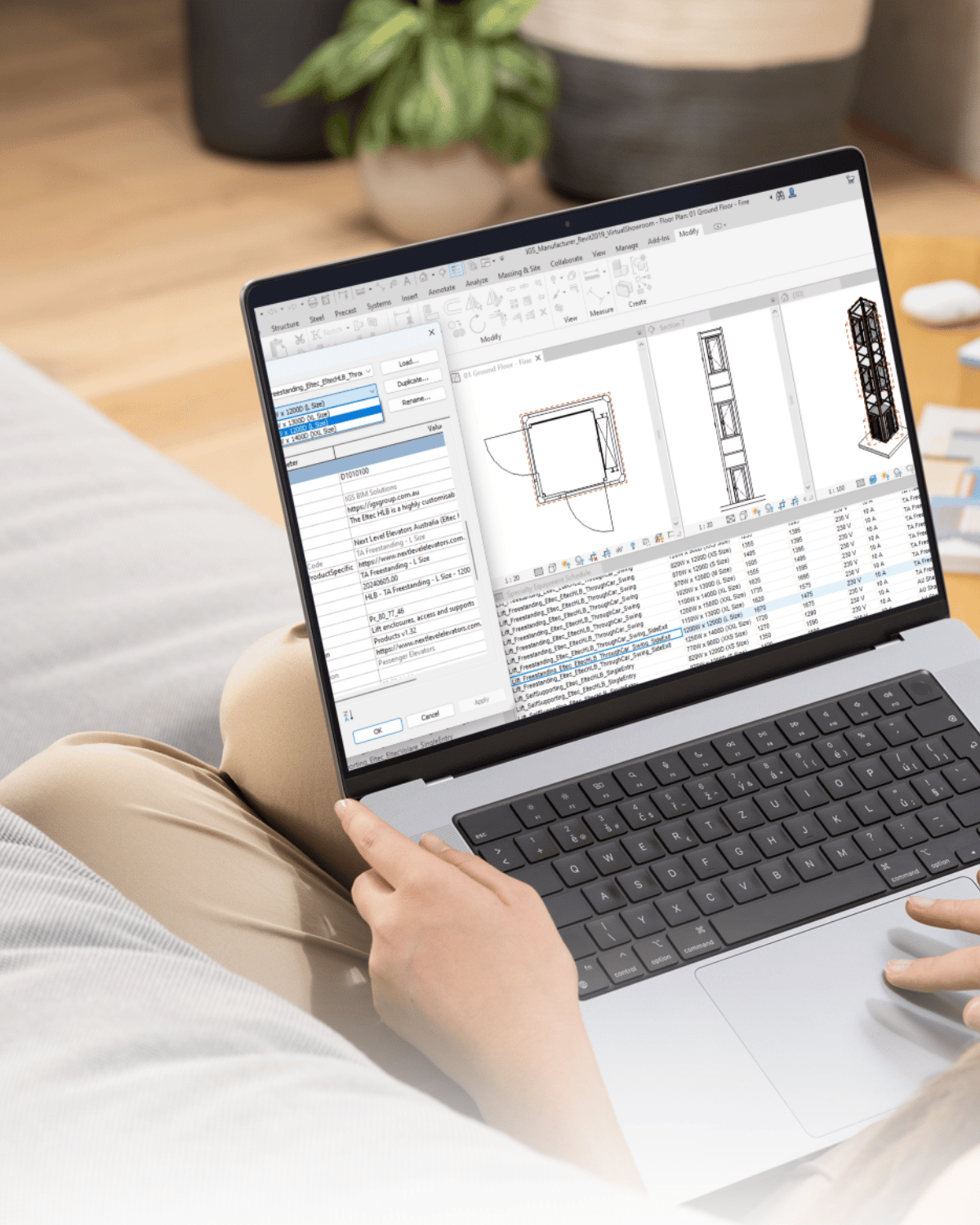
You might think: “We can just hire someone who knows Revit.” But here’s another catch – Revit content creation is a niche skill even among Revit users.
In large architectural firms, you’ll often find only a handful of people who truly specialise in Revit family creation. Why? Because it requires an intimate understanding of the software’s inner workings and a mindset that’s part designer, part programmer, and part data management specialist.
Staying Up to Date: It’s a Full-Time Commitment
Another challenge that’s easy to underestimate is the need to keep up with best practices and evolving industry standards. Revit, and the broader BIM environment, is constantly evolving. Whether it’s new software updates, changes to the role and deliverables required of project stakeholders, or shifting expectations around data and model performance, staying current isn’t something you can do as a side project. It requires ongoing focus and involvement in both the technology and AEC industry.
Liability & Business Risk
Let’s say you do find (or train) someone internally who’s capable of doing this work. What happens if that person leaves your business, moves into a different role, goes on extended leave, or simply loses interest? The reality is that:
- Replacing specialist Revit content creators is difficult and time-consuming.
- Upskilling new team members is a costly and slow process.
- You risk being left with a half-finished or outdated Revit library that might reflect poorly on your brand.
We’ve worked with manufacturers who tried to go it alone initially, only to come back to us later needing their libraries rebuilt from scratch. It’s an expensive lesson.
The Benefits of Working With a Specialist Like IGS Group (IGS BIM Solutions)
So what’s the alternative to trying to build Revit content yourself? Partnering with specialists who do this day in, day out, and who know exactly what’s required to create high-performance BIM assets for your products.
Here’s why working with a specialist like IGS Group is a smart decision:
- We Understand Your Audience. Our team doesn’t just know how to build BIM content; we understand why designers need it, and how they use it in real projects. That means we focus on making your BIM content practical, user-friendly, and aligned with what architects, engineers, and contractors want to use in their projects.
- Content That Performs. We don’t just make content look good – we make sure it works under real-world project conditions. Our Revit families are optimised for performance within large, complex project models and they generate the various deliverables and outputs project stakeholders require.
- Consistency & Quality. Designers hate inconsistency. Our strict quality control processes mean your entire library will be cohesive, reliable, and align with industry best practice standards – enhancing your reputation as a professional supplier who is committed to quality in everything you do.
- Native Modelling & Best Practices. We model everything natively in Revit (or Archicad) using the best practices that maximise functionality and performance within that software, ensuring your content is compatible with evolving industry requirements.
- Faster Time to Market. We’ve delivered libraries for over 150 manufacturers around the world, and we have a team of specialists working on our client projects, which means we have proven processes that get your content to market faster, without cutting corners.
- Ongoing Support. BIM content isn’t a “set and forget” asset. Whether you need updates, new products modelled, or content refined to meet new standards, we’re your long-term partner for keeping your library in top shape.
- Reduced Risk. By engaging us, you avoid the pitfalls of internal staff turnover, upskilling costs, distractions, and stalled projects. We give you the certainty of a dedicated, experienced team with a single focus: getting your BIM content created and making it world-class.
At the end of the day, high-quality BIM content isn’t just a technical asset, it’s a marketing tool that directly influences how often your products get specified. When you work with IGS Group (IGS BIM Solutions), you’re not just outsourcing a task – you’re investing in a partnership and the expertise and proven processes that maximise your exposure and win specifications.
The Bottom Line
The idea of building your own Revit content can seem appealing, in theory. But in practice, it’s a highly specialised task that demands deep expertise in how buildings are designed and documented within the Revit environment, not just how products are drawn.
At IGS Group, we live and breathe this stuff. It’s all we do, and our team is made up of specialists who are dedicated to staying at the cutting edge of both Revit best practices and AEC industry requirements. That’s why designers trust and proactively seek out the BIM content we build for our manufacturer partners, and why it works as a highly effective marketing asset for your brand.
If you’re serious about investing in BIM content that helps you win specifications, and makes you a preferred partner among specifiers, you’re far better off partnering with specialists who get it right the first time.
... Return to the Knowledge Hub ...
Table of Contents
Sign up today for news, industry insights & content releases!
You can unsubscribe at any time by clicking the link in the footer of our emails. For information about our privacy practices, please visit our privacy policy.
FAQs
Related Posts
The building industry is rapidly evolving. Don’t get left behind!
Join the growing list of leading brands who leverage our BIM Content Creation Services
and associated Building Product Marketing Strategies to grow your business.
Contact Us
We look forward to speaking with you!
For inquiries about BIM content creation, web or product marketing solutions as well as general inquiries and support, please fill out the contact form provided, or contact us via the details below.
1300 980 763