



Your Product Isn’t the Only Thing Being Evaluated
A good product matters, but architects and other specifiers evaluate much more than the product itself. From BIM content and technical information to availability, support and ease of use, different factors can influence whether a product gets considered, brought into the design and ultimately specified.

This post was written by:

-
Owner & Managing Director, IGS GroupThis post was written and submitted by an individual contributor and does not reflect the views or attitudes of IGS Group or BIMcontent.com as a whole. About the author:
When building product manufacturers talk about specification, the conversation understandably tends to start with the product.
Is it a good product? Does it perform well? Is it competitively priced? Does it look good? Does it solve a problem better than the alternatives?
All of those things matter.
But one of the things I’ve learned from working with manufacturers and the design industry over the years is that when an architect or other specifier evaluates a product, they’re rarely evaluating the physical product in isolation.
They’re evaluating everything around it as well.
The information available about it. How easy that information is to find. Whether they can confidently understand where the product is suitable. The BIM or CAD resources available to help them work with it. Price. Availability. Lead times. Technical support. Previous experience with the manufacturer. Brand familiarity. And, quite simply, how much effort is required to use that product on their project.
These things don’t all carry equal weight all of the time. What matters most can change depending on the project, the designer and where they are in the design and documentation process.
Sometimes, one particular thing can make all the difference.
How does a product actually get into a project?
I think manufacturers sometimes imagine specification as a relatively linear process.
A designer considers a number of products, evaluates them, chooses the best one and eventually specifies it.
In reality, it’s often much less orderly than that.
Products can find their way into projects for all sorts of reasons, at all sorts of times.
A designer might already know the product from another project. A specification rep might have introduced it months earlier. Someone else in the office might recommend it. They might find it through Google, come across it while researching a technical requirement, or have seen it used successfully somewhere else.
Or they might simply be working in Revit, need a suitable product to keep developing their model, find a manufacturer’s BIM content and place it into the project.
In that situation, having usable BIM content available at the right time may genuinely be the reason that manufacturer’s product gets selected for the design.
The designer hasn’t necessarily completed an exhaustive comparison of every available alternative. They had a job to do, the product appeared suitable, the content they needed was available, and they could keep working.
That’s a very real part of how products find their way into projects.
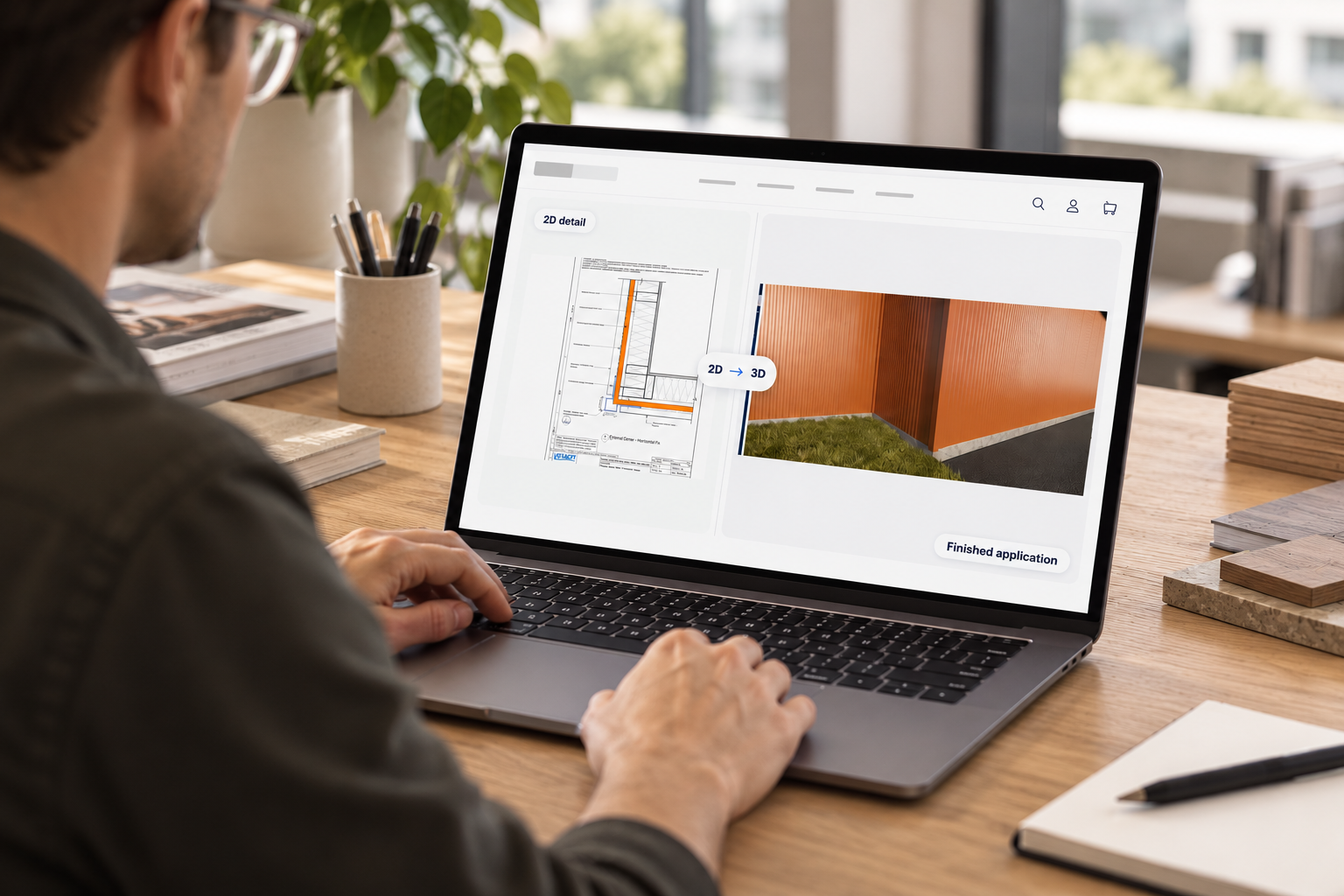
Sometimes your product doesn’t get evaluated at all
Over the years, we’ve had plenty of designers tell us privately that they simply won’t consider certain manufacturers because they know they don’t provide the BIM resources they need.
It’s not necessarily something designers will say publicly. Understandably, most would prefer to talk about product selection in terms of design suitability, performance, aesthetics and the needs of the project, rather than how much work one manufacturer’s products create for them.
But the practical reality of doing the job matters too.
If a designer already knows that considering a particular manufacturer’s product is likely to mean modelling it themselves, chasing information or finding workarounds, they may simply start somewhere else.
The product hasn’t necessarily been evaluated and rejected.
It may never have been evaluated at all.
I think that’s an important distinction for manufacturers.
Sometimes the things surrounding your product aren’t just influencing how the product is evaluated. They can influence whether it gets evaluated in the first place.
Getting into the design early matters
There is real value in making it easy for a product to become part of the design process early.
Early selection certainly doesn’t guarantee the final specification. But there is a meaningful difference between a product that’s already sitting within the designer’s working or conceptual model and one that isn’t yet being considered.
Once a product is in the model, the project team can start working with it.
It might begin appearing in drawings, schedules or details. The designer becomes familiar with it. Other elements of the design may develop around it, and information about the product can start flowing into the broader project documentation.
It has become part of the evolving design.
That’s a valuable position for a manufacturer to be in, but it’s still only a position. It has to be maintained.
Products can come out just as easily as they go in
As the design develops, different considerations become important.
The product still needs to be appropriate for the application and meet the required performance criteria. Budget, availability and lead times can become more important. Technical information, testing or certification may be needed. A client, consultant or contractor might introduce an alternative. Something elsewhere in the design may change.
Later again, products can face further challenges through value management, procurement and substitution.
So getting into a project and staying in a project aren’t necessarily driven by the same things.
Having the right BIM content available might help a product get into the model early. Its technical performance might help it stay there as the design develops. Good product information might help the
architect confidently document it. Responsive technical support might keep it there when a question or problem arises. Price and availability might become much more important later.
The relative importance of each can change throughout the project.
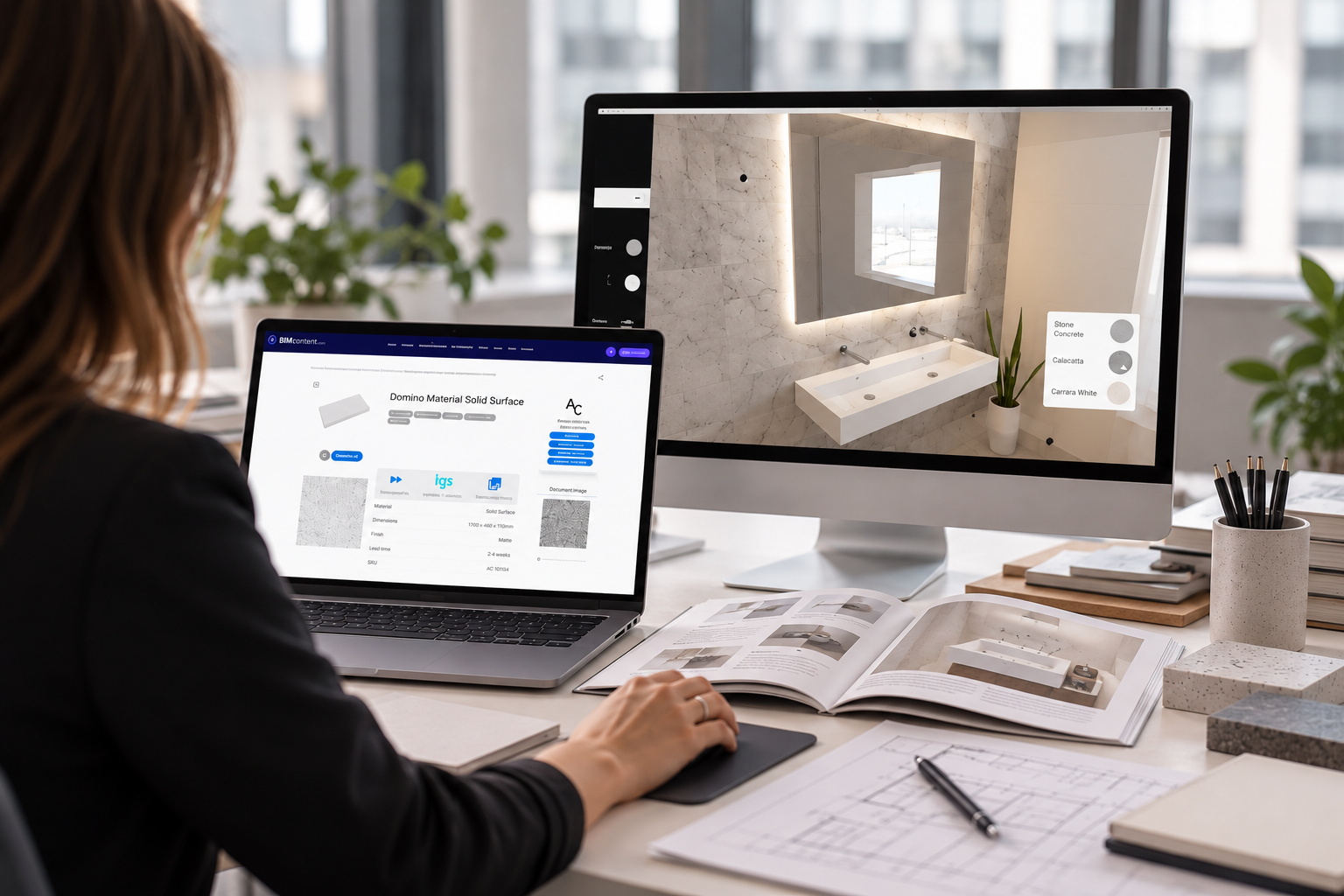
What are specifiers evaluating when they consider a building product?
Of course you need a good product.
But the specifier is also trying to establish whether it’s suitable for the application, whether it meets the project’s performance requirements, whether it’s likely to fit the budget and whether it will be available when needed.
At the same time, they’re experiencing everything around the product: how easily they can understand the range, whether the information is current and reliable, whether they can efficiently incorporate the product into their design and documentation, and whether knowledgeable support is available when they need it.
Some of that will be deliberately evaluated. Some will simply be experienced as friction.
If one manufacturer’s website takes two minutes to find what you need and another takes twenty, that matters.
If one manufacturer provides usable BIM content and another requires the designer to create something themselves, that matters too.
The same goes for getting a useful answer from a technical team that afternoon rather than waiting a week.
The physical products might be very similar.
The experience of evaluating and working with them can be completely different.
Sometimes one thing really can make the difference
It’s tempting to say that no single factor gets a product selected or specified. I don’t think that’s actually true.
Sometimes one thing really can make the difference.
A particular performance characteristic could be essential to the project. A price difference could make one option viable and another impossible. Lead time could rule something out immediately. Years of positive experience with a manufacturer might give the designer confidence to use them again.
And sometimes having the right digital asset available when the designer actually needs to do something can influence which product gets brought into the design.
The point isn’t that every factor carries equal weight.
You don’t necessarily know which part of your offering is going to matter most to a particular designer, on a particular project, at a particular point in time.
What gets a product into the project may also be completely different from what keeps it there.
The specification experience extends beyond the product
When I look at manufacturers that are easy for designers to work with, it’s rarely because they’ve got one of these things right. It’s usually because they’ve thought about the experience around the product as well as the product itself.
The website, product information, BIM and CAD content, technical literature, specification resources, samples, sales and technical people, pricing, availability and brand can all contribute in different ways.
They aren’t necessarily equal and they won’t all matter on every project. Collectively, though, they shape how easily someone can discover a product, evaluate it, bring it into their design, work with it and ultimately document it.
For manufacturers, that means considering the complete experience and identifying the points of friction that could prevent a product getting into a project in the first place, or cause it to be removed later.
The physical product obviously remains fundamental. It needs to be suitable for the project.
But designers don’t encounter products in a neat, predictable sequence. A product can enter a project early because it was easy to find and easy to use. It can remain there because it performs well and the manufacturer provides the information and support needed as the project develops. Eventually, it may be formally specified.
Or it can fall out somewhere along the way.
The challenge for manufacturers is that you don’t always know which interaction will matter most.
So it’s worth looking beyond the product itself and asking:
What is it actually like for a specifier to discover, evaluate and work with our products throughout a project?
Because your product is being evaluated.
But so is almost everything you put around it.
Continue the Business of Specification series
This article is Part 2 of The Business of Specification, a three-part series exploring what really happens between a building product manufacturer wanting to be specified, a designer trying to get a project delivered – and what manufacturers can learn from it.
Part 1: What Do Architects Actually Get Paid For?
How architecture practices work commercially, why time matters, and the cost to a practice of specifying products that are difficult to research or document.
Written by:
-
Owner & Managing Director, IGS GroupThis post was written and submitted by an individual contributor and does not reflect the views or attitudes of IGS Group or BIMcontent.com as a whole. About the author:
Luke Johnston is the Owner and Managing Director of IGS Group and BIMcontent.com, with over 20 years’ experience in building product sales and marketing. Internationally recognised as an authority on BIM content development, Luke is known for his strategic insights, partnering with manufacturers and design firms to implement and enhance their BIM strategies. He has advised and delivered BIM solutions to over 150 manufacturers globally and is passionate about helping businesses leverage design technology as a powerful tool for specification growth and commercial success.
... Return to the Knowledge Hub ...
Table of Contents
Sign up today for news, industry insights & content releases!
You can unsubscribe at any time by clicking the link in the footer of our emails. For information about our privacy practices, please visit our privacy policy.
FAQs
Related Posts


The building industry is rapidly evolving. Don’t get left behind!
Join the growing list of leading brands who leverage our BIM Content Creation Services
and associated Building Product Marketing Strategies to grow your business.
Contact Us
We look forward to speaking with you!
For inquiries about BIM content creation, web or product marketing solutions as well as general inquiries and support, please fill out the contact form provided, or contact us via the details below.
1300 980 763