


If I Took Over a Building Product Manufacturer Tomorrow, Here’s Where I’d Invest First
If I took over a building product manufacturer tomorrow, I'd look closely at the digital experience being provided to designers and specifiers. Drawing on firsthand experience in building product sales and marketing, here's why I'd be prepared to over-index investment in BIM, product information and digital specification tools.
This post was written by:

-
Owner & Managing Director, IGS GroupThis post was written and submitted by an individual contributor and does not reflect the views or attitudes of IGS Group or BIMcontent.com as a whole. About the author:
If I took over the sales and marketing function of a building product manufacturer tomorrow, there are obviously plenty of things I’d want to understand before I started moving budgets around.
The products. The markets. The customers. The competitors. The sales team. Where specifications were coming from and where they were being lost.
But there’s one area I’d be looking at very closely, very early.
The digital experience we’re providing to designers and specifiers.
And if it wasn’t very good, that’s where I’d be prepared to over-index our investment.
I realise there’s an obvious response to that.
I run a business that specialises in BIM and digital solutions for building product manufacturers, so of course I’m going to say manufacturers should invest more heavily in digital.
But in my case, it actually happened the other way around.
I didn’t get into digital and then decide it was important
Before IGS, I spent years working in sales, marketing and specification for building product manufacturers.
I was on the manufacturer side, trying to get our products in front of architects and ultimately into projects.
During that time, I became increasingly focused on making our products easier for designers to find, understand and work with digitally. I could see firsthand that it was working.
More importantly, designers were telling me it was working.
On multiple occasions, I had designers say things to me along the lines of, “Can you leave the company you’re working for and go and set this up for other manufacturers? Because this is what we want from all our suppliers.”
Those conversations stuck with me.
These were the people we were actually trying to influence and support, telling me without being prompted that the way we were approaching digital product information and specification resources was genuinely valuable to them.
Eventually, I became convinced enough to act on it.
I left a great role at a great company and started a business focused on helping building product manufacturers do exactly that.
I certainly wouldn’t have made that decision if I hadn’t seen the results firsthand.
So my belief in digital isn’t a consequence of what I do today.
It’s one of the main reasons I ended up doing what I do today.
When a better product wasn’t enough
Another experience from those years had a big influence on how I think about building product sales and marketing.
In some markets, we had particular architecture practices that had been specifying our competitors for a long time.
We introduced new products. In some cases, we genuinely believed we had a better offering, with better features and benefits and stronger certifications or performance ratings. We had specification people talking to architects about those advantages.
And still, some practices kept specifying the products they’d always specified.
There was probably an element of familiarity and habit involved. What they were already using worked. They understood it. They knew the supplier. We weren’t giving them a compelling enough reason to change.
What eventually started shifting behaviour in some of those practices wasn’t another product feature.
It was when we introduced our BIM library and improved the specification tools around our products.
Suddenly we weren’t just asking designers to change supplier because we believed our product was better. We were giving them something that was valuable to them.
We were saving them time, making our products easier to incorporate into their projects and documentation, giving them better information to work with and helping reduce some of the uncertainty and risk involved in specifying them.
And we started seeing practices that had previously been difficult to shift begin specifying our products.
That changed the way I thought about sales and marketing.
Manufacturers naturally spend an enormous amount of time thinking about the reasons we want a designer to specify our product.
I became much more interested in another question:
What are we giving the designer that makes them want to work with us?

Why I’d over-index on digital
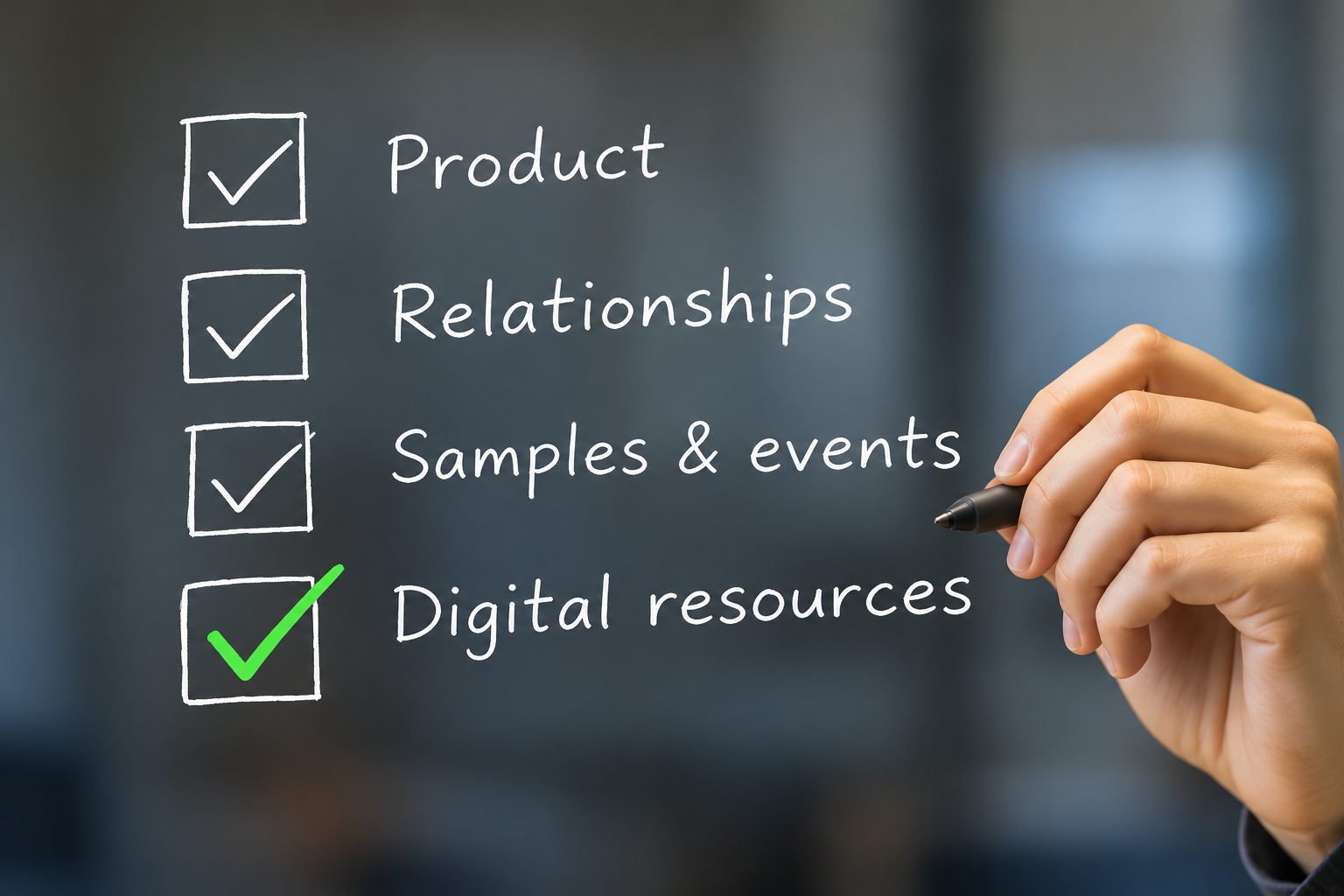
I’m not suggesting manufacturers should stop employing specification reps. Relationships matter. So do samples, showrooms, events, advertising, sponsorships and face-to-face interaction.
This isn’t digital versus people.
For me, it’s about whether the balance of investment reflects how designers actually work today.
Digital resources are often there at the precise point where someone has to do something. Research a product. Compare options. Find technical information. Work out whether something is appropriate for an application. Put something into Revit. Document it.
They might need to do that at 10:00 on a Tuesday morning or 8:30 on a Thursday night.
A specification rep can’t be sitting beside every designer whenever one of those moments occurs.
Your digital resources can.
The last 10 metres
I’ve often described BIM content as the last 10 metres of a 100-metre race.
A manufacturer can run the first 90 metres incredibly well.
Develop a great product. Build a strong brand. Advertise. Employ excellent specification reps. Develop relationships with architects. Run presentations and events. Provide samples. Invest in showrooms.
You can do a huge amount of work creating awareness, trust and preference.
The designer might even prefer your product.
Then they get back to their desk and have a job to do.
They need to put something into the model.
If your product isn’t easy to work with digitally and another suitable manufacturer’s product is, you’ve potentially given that competitor an opportunity in the last 10 metres.
BIM isn’t just another marketing asset in that situation. It’s sitting very close to the point where interest and preference have to become action.
Sometimes the designer will overcome the friction. Sometimes they’ll call you. Sometimes they’ll use something else.

Digital can give you a head start too
The same influence can occur much earlier in the project.
A designer working on an early model may simply need something suitable to keep progressing the design.
They find your product, find usable BIM content and put it into the model. They haven’t necessarily conducted an exhaustive evaluation of every competitor.
Your product was suitable. Your content was available. They could keep working.
Now you’re in the project.
That certainly doesn’t guarantee you’ll stay there. The things that get a product into a project aren’t necessarily the same things that keep it there.
But you’re in a much better position than a product that hasn’t been considered at all.
That’s one of the reasons I think digital can have disproportionate influence.
It can help give you a head start, and it can help you across the finish line.
The digital specification experience is bigger than BIM
Given my background and the work we do today, BIM is naturally one of the areas I focus on. But the principle is much broader.
If I were running a manufacturer, I’d be looking at the entire digital specification experience.
Can designers easily find our products and understand the range? Is the information current and reliable? Can someone quickly establish where a product is suitable and access the technical information, testing or certification they need?
Do we provide useful BIM and CAD resources? Are our specification resources easy to work with? Could selectors, configurators, calculators or other tools simplify decisions? Could browser-based 3D or other digital tools help communicate products that are difficult to understand through a brochure or PDF?
And importantly, how much of this can a designer do themselves without waiting for one of our people?
That’s what I mean by investing in digital.
It’s not technology for the sake of technology.
It’s making it easier for customers to do their jobs.
Digital gives smaller manufacturers leverage
One of the things I’ve always liked about digital is that it’s a relatively level playing field.
A smaller manufacturer may never be able to match a multinational’s sales team, showroom network, advertising budget or brand recognition.
But its website can be better. Its product information can be better. Its BIM content can be better. Its technical resources can be easier to find and its digital tools can be more useful.
The overall experience of working with that smaller manufacturer can be better.
A digital resource doesn’t particularly care whether your company employs 30 people or 3,000. It can support multiple designers in multiple locations at the same time, including when your sales team has gone home.
For smaller manufacturers trying to compete with much larger businesses, that’s powerful leverage.
One digital investment can open new markets
I’ve also seen that the return on a digital investment doesn’t necessarily stay within the market it was originally intended to support.
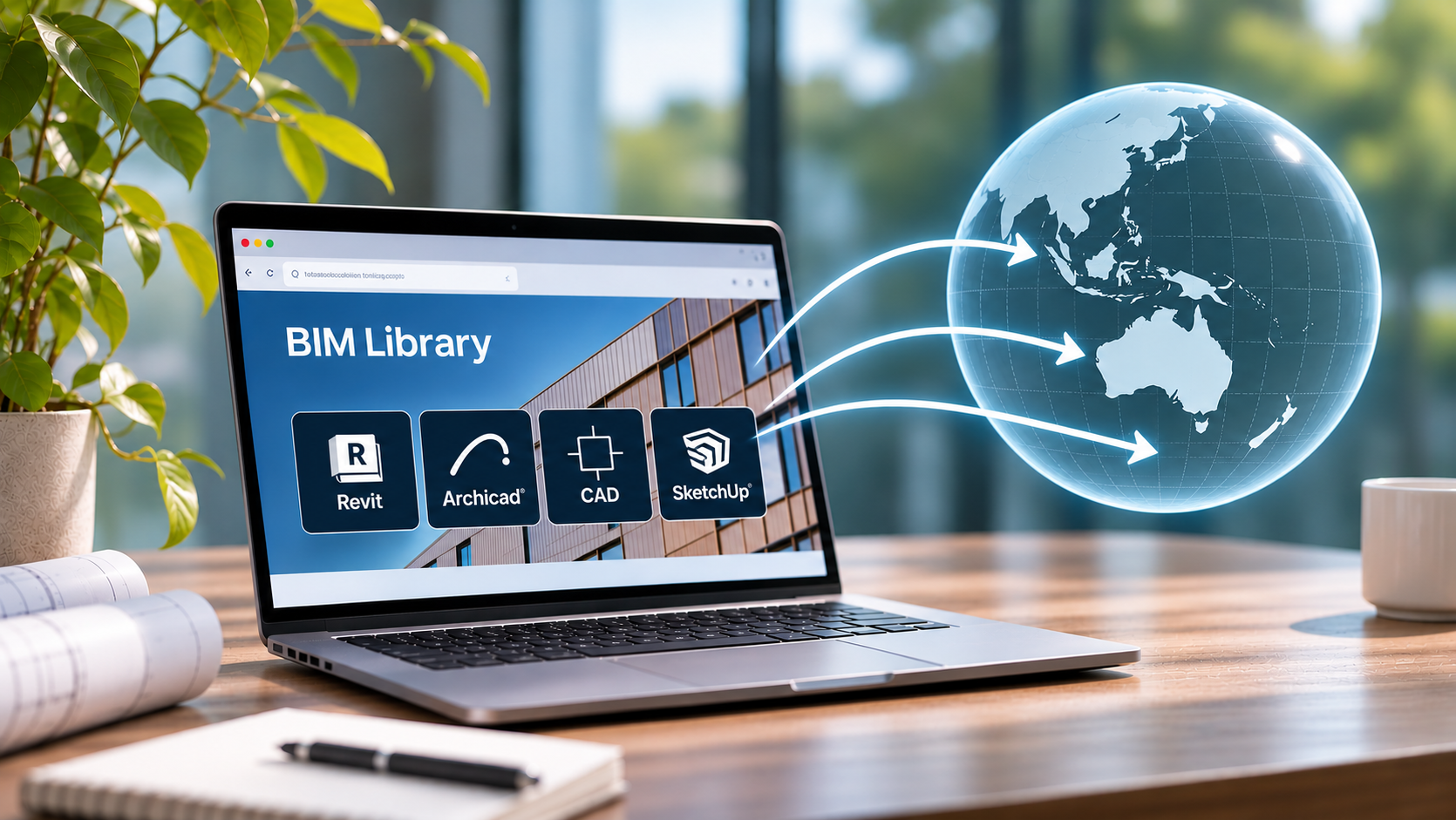
A manufacturer might invest in its website, BIM library and specification resources primarily to better service the customers and markets it already has.
But once those assets exist, their reach isn’t constrained in the same way as a sales team.
A manufacturer with a strong position on Australia’s East Coast might start seeing designers in Western Australia finding and downloading its content, putting its products into projects and generating enquiries.
A sales team with strong relationships among larger architectural practices might start reaching smaller or regional practices they’ve never visited. Products established in one part of the market can begin appearing in projects or sectors where the manufacturer previously had little presence.
We’ve seen this happen with manufacturers we’ve worked with.
Digital investments made to support an established market have also generated awareness, project opportunities and sales in markets where the manufacturer previously had little presence.
In some cases, the incremental investment required to start reaching that additional market has effectively been zero.
The website was already there. The BIM library had already been created. The product information and specification resources already existed.
They simply started working somewhere else too.
If that develops into meaningful demand, the manufacturer can then decide whether to put people, distribution, local representation or physical infrastructure behind it. We’ve seen manufacturers follow that progression as well.
Instead of making the larger investment first and hoping demand follows, digital can help expose where the opportunities are.
One investment can support the market you already have while opening doors into markets you weren’t originally investing in.
Larger manufacturers should question the balance too
This isn’t only an opportunity for smaller businesses.
Large manufacturers can afford substantial specification teams, events, showrooms, advertising, sponsorships and other traditional sales and marketing activity. Some of those investments may be working extremely well.
But spending patterns can also become established simply because that’s how the business has always gone to market.
If we’re spending heavily getting people in front of architects but making those same architects work unnecessarily hard once they’re interested in our products, I’d question whether the balance is right.
The question I’d be asking is:
Does the way we’re allocating our sales and marketing budget reflect the way designers actually work today?
Invest in things that create value for the customer
Manufacturers quite reasonably want specifications.
We want architects to know our brand, understand our products, prefer us to our competitors and put our products into their projects.
But that’s what we want from them.
I’ve become increasingly interested in what we’re giving them in return.
Are we saving them time? Making decisions easier? Giving them greater confidence? Reducing risk? Making our products easier to understand, use and document?
Are we helping them get their work done?
That’s the lens I’d use when deciding where to invest.
I’d still want great people and strong relationships. I’d want a strong brand and, most importantly, genuinely good products.
But if I took over a building product manufacturer tomorrow, I’d make absolutely sure the digital experience surrounding those products was every bit as good as the products themselves.
And if it wasn’t, that’s one of the first places I’d put my money.
Written by:
-
Owner & Managing Director, IGS GroupThis post was written and submitted by an individual contributor and does not reflect the views or attitudes of IGS Group or BIMcontent.com as a whole. About the author:
Luke Johnston is the Owner and Managing Director of IGS Group and BIMcontent.com, with over 20 years’ experience in building product sales and marketing. Internationally recognised as an authority on BIM content development, Luke is known for his strategic insights, partnering with manufacturers and design firms to implement and enhance their BIM strategies. He has advised and delivered BIM solutions to over 150 manufacturers globally and is passionate about helping businesses leverage design technology as a powerful tool for specification growth and commercial success.
... Return to the Knowledge Hub ...
Table of Contents
Sign up today for news, industry insights & content releases!
You can unsubscribe at any time by clicking the link in the footer of our emails. For information about our privacy practices, please visit our privacy policy.
FAQs
Related Posts

The building industry is rapidly evolving. Don’t get left behind!
Join the growing list of leading brands who leverage our BIM Content Creation Services
and associated Building Product Marketing Strategies to grow your business.
Contact Us
We look forward to speaking with you!
For inquiries about BIM content creation, web or product marketing solutions as well as general inquiries and support, please fill out the contact form provided, or contact us via the details below.
1300 980 763