



Video: Why High Quality Lighting BIM (Revit) Content Matters
In this Designer Insights episode, industry professionals explore why lighting BIM content has become an essential part of modern design workflows. From commercial interiors to public spaces, accurate manufacturer BIM content enables architects, interior designers, and engineers to make informed specification decisions, streamline project delivery, improve multidisciplinary coordination, and reduce costly design revisions.
Lighting plays a critical role in architectural design, influencing not only the appearance of a space but also how it functions and is experienced. As Building Information Modelling (BIM) continues to shape the way projects are designed and documented, access to high-quality lighting BIM content has become increasingly important for architects, interior designers and manufacturers alike.
Professionally developed Revit families allow design teams to accurately specify lighting products, improve project coordination and create more efficient workflows. For manufacturers, providing quality BIM content makes products easier to discover, evaluate and specify throughout the design process.
Key Takeaways
- Lighting is an important BIM product category because it impacts both the aesthetics and performance of a building.
- Architects and designers increasingly rely on manufacturer BIM content to improve project efficiency.
- High-quality Revit families reduce modelling time while providing the technical information required for documentation.
- Manufacturers with professionally developed BIM content have a competitive advantage during specification.
- Publishing BIM content through BIMcontent.com makes products more accessible to architects and designers.
Why Lighting BIM Content Matters
Lighting is not just a purely functional building element and in many instances is a defining feature of modern design. Whether it’s decorative pendants, linear profiles, recessed downlights or architectural lighting systems, designers need accurate digital representations that reflect both the visual and technical characteristics of each product.
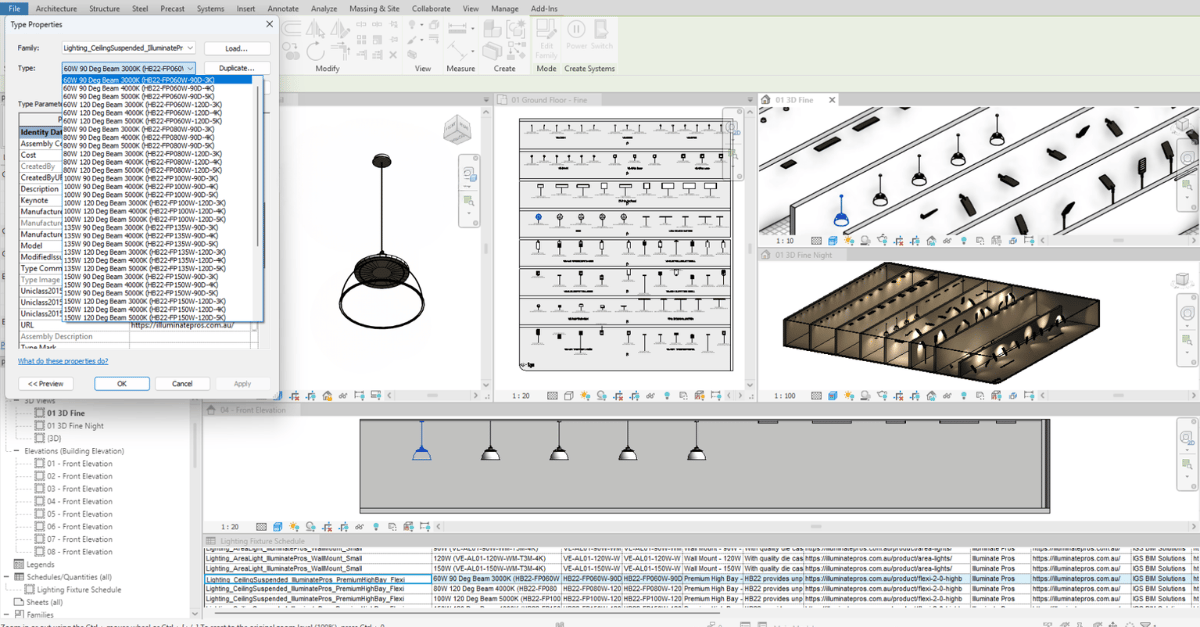
Unlike many building components, lighting families often require additional information such as photometric performance, mounting details, dimensions and technical specifications. Designers rely on this information to coordinate with electrical engineers, communicate design intent to clients and produce accurate project documentation.
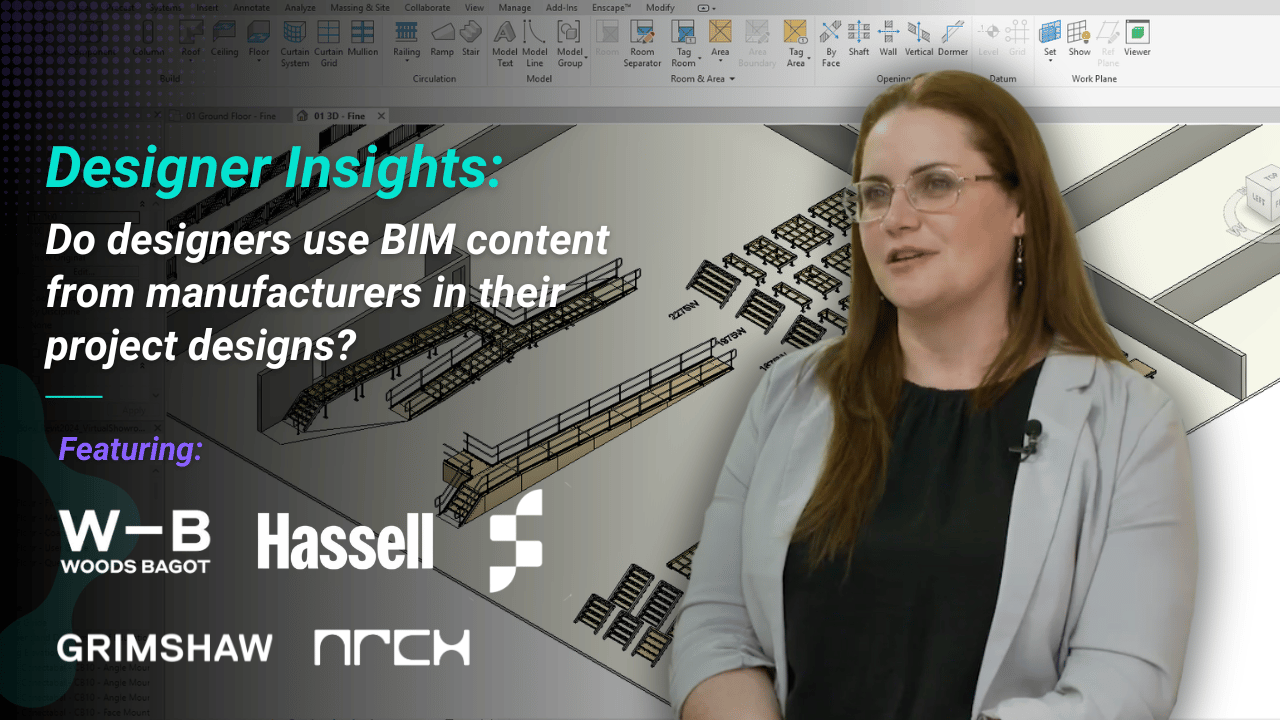
Kellie Adler, Senior Architectural Technician BIM Manager at Arch:
Being able to put in a correct lighting fixture within a project really helps to give a design aesthetic to the client…and for us to be able to make it is very time consuming…
Without manufacturer-provided BIM content, many practices are forced to create lighting families themselves, adding unnecessary time and increasing the risk of inconsistencies throughout the project.
The Specification Advantage for Manufacturers
When architects and designers search for lighting products, the availability of quality BIM content can significantly influence specification decisions.
Manufacturers that invest in natively created Revit families make it easier for design teams to confidently evaluate and incorporate their products into projects. Rather than spending valuable project time recreating lighting fixtures, designers can focus on developing the overall design while relying on accurate manufacturer data.
As BIM workflows become standard practice across the industry, manufacturers who provide accessible, reliable BIM content position themselves ahead of competitors who do not.

Why Quality Lighting BIM Content Matters
Lighting is one of the more technically complex BIM categories because it interacts with multiple disciplines throughout a project.
Design teams require BIM objects that include:
- Accurate product geometry
- Correct dimensions and mounting information
- Relevant technical and performance data
- Coordination information for documentation
- Reliable product parameters for scheduling and specification
Creating this content internally requires specialist knowledge and considerable time. Professionally developed BIM content allows architects and designers to work more efficiently while maintaining confidence that the information they’re using accurately represents the manufacturer’s products.
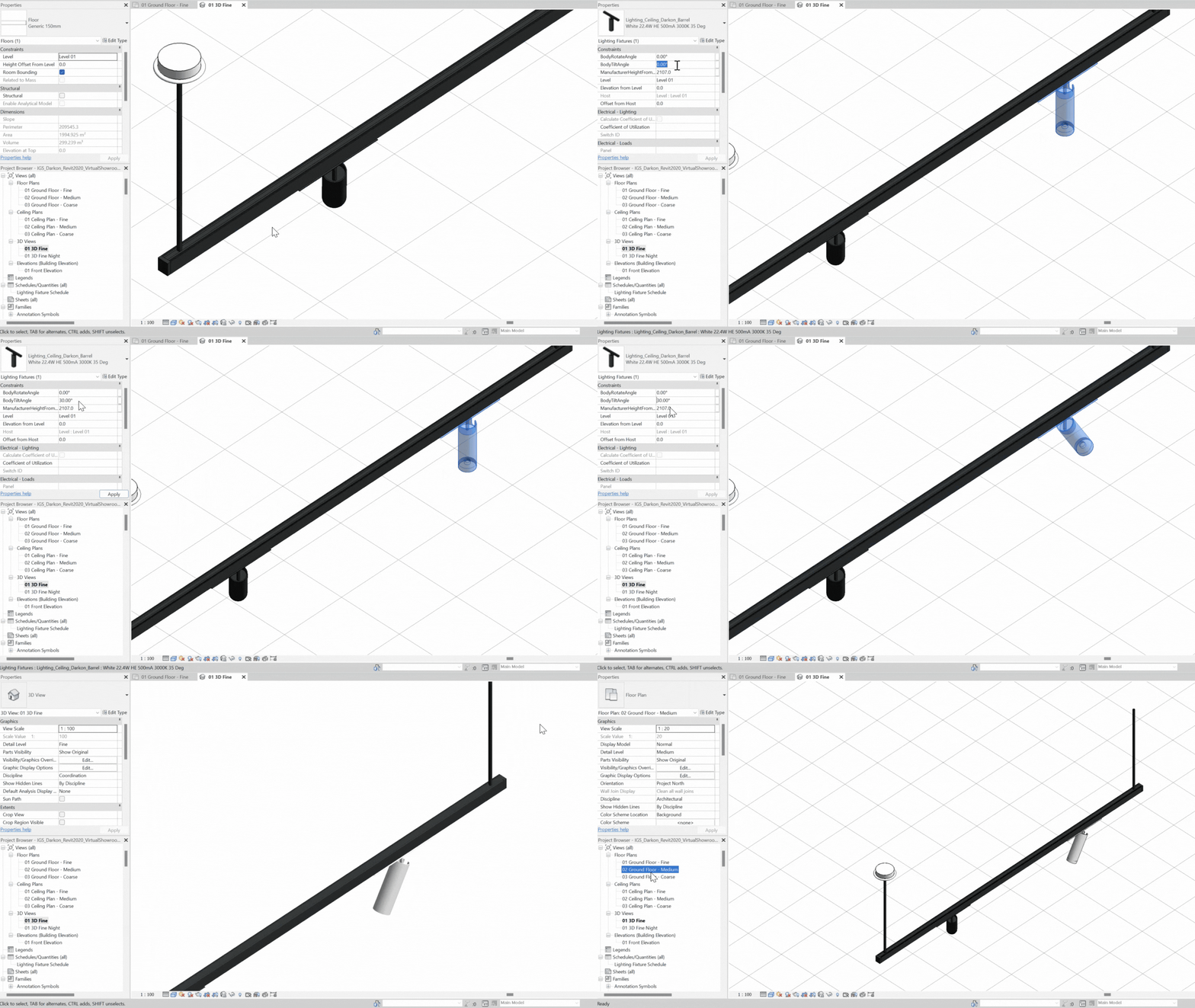
High-quality BIM content is more than a visually accurate model. Designers expect Revit families that are lightweight, consistently structured, contain meaningful parameters and perform reliably throughout documentation and coordination workflows.
Why Designers Use BIMcontent.com
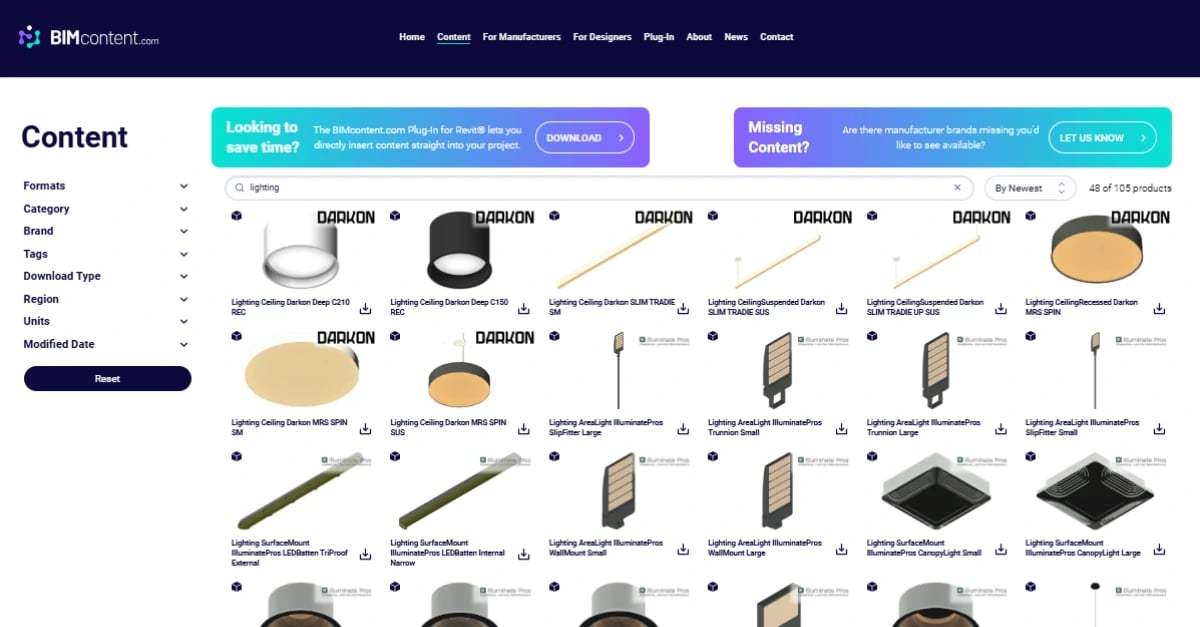
Design professionals increasingly use BIMcontent.com as a trusted source of manufacturer BIM content.
Having products available through BIMcontent.com gives architects, interior designers and consultants confidence that the Revit families have been professionally developed and are suitable for use in live projects.
Many designers actively recommend that manufacturers with missing or inadequate BIM libraries work with IGS to develop high-quality content that benefits both manufacturers and the wider design community.
Connor Davy, Project BIM Manager at Grimshaw:
We allow all of our designers, to use BIMcontent.com. We have developed processes that have allowed us to do that…having a local resource that looked good, performs well, that was free. It seemed like a no-brainer to implement it.
For manufacturers, this means greater visibility during the specification process and increased opportunities to have products selected for projects.
Frequently Asked Questions
What is Lighting BIM Content?
Lighting BIM content is a manufacturer-specific Revit family that accurately represents a lighting product for use in Building Information Modelling (BIM) projects. High-quality lighting BIM objects combine accurate geometry with product information, appropriate levels of detail and correctly configured parameters, enabling architects and designers to confidently visualise, specify, coordinate and document lighting products throughout the design process.
What Makes a High-Quality Lighting BIM Object?
A high-quality lighting BIM object is more than an accurate 3D model. It should be built using native Revit geometry, include meaningful product parameters, maintain appropriate levels of detail for different project stages and be optimised for performance without unnecessary file size. High-quality content should also be consistently named, easy to use and accurately represent the manufacturer’s product, giving designers confidence that it can be incorporated into live projects with minimal modification.
Ready to Make Your Products Easier to Specify?
BIMcontent.com helps lighting product manufacturers create, distribute high-quality BIM content used by architects, interior designers and engineers.
Put your products where design professionals are already looking and make specification easier with BIMcontent.com.
Related Posts


The building industry is rapidly evolving. Don’t get left behind!
Join the growing list of leading brands who leverage our BIM Content Creation Services
and associated Building Product Marketing Strategies to grow your business.
Contact Us
We look forward to speaking with you!
For inquiries about BIM content creation, web or product marketing solutions as well as general inquiries and support, please fill out the contact form provided, or contact us via the details below.
1300 980 763